
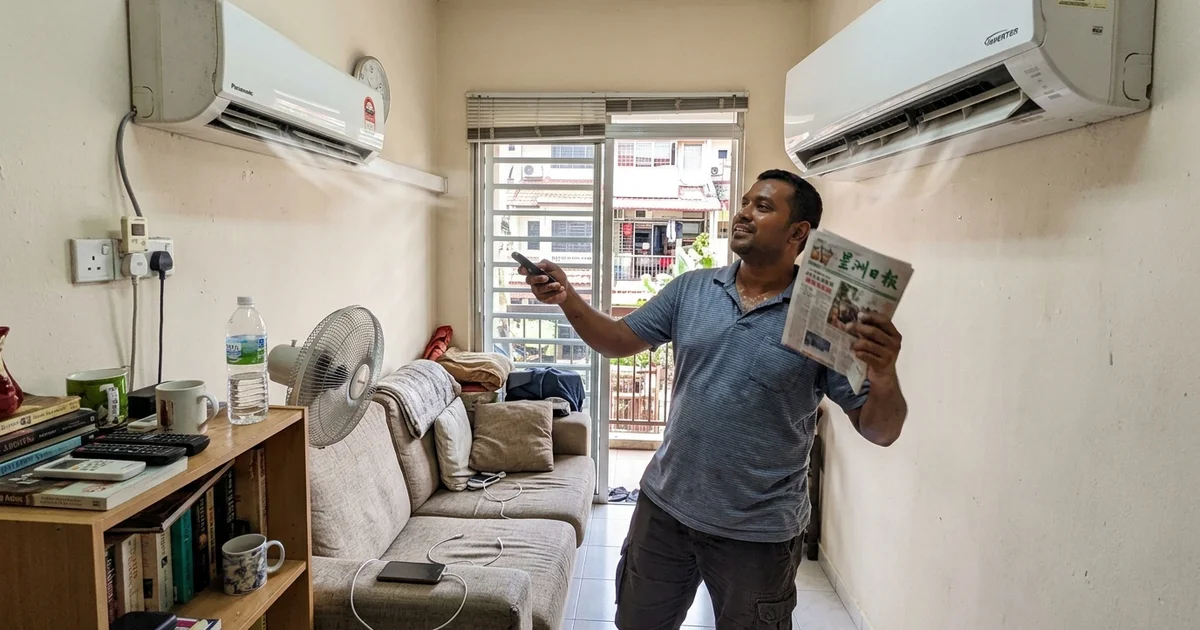
You know how frustrating it is when the Klang Valley heat peaks at 35°C and your aircon is not cold.
We handle a ton of these calls during the dry season between February and May. An aircon that runs but doesn’t cool is a very common issue. Our aircon repair team sees this specific problem daily.
Before you book a technician, spend two minutes on a few basic checks. They solve the problem more often than you might think. Let’s look at the data on common failures and then explore practical ways to respond.
- Check the mode. Make sure the remote shows the snowflake (cool) symbol, not fan, dry or auto. It is incredibly easy to bump the mode button by accident.
- Check the temperature. Set it to 24°C and give it 15 minutes to regulate.
- Check the filters. Lift the front panel and inspect the mesh. If they are grey and furry, rinse them, let them dry, and refit them.
- Check the outdoor unit. Go outside and look while the aircon is running. Is the large fan spinning? Can you hear the compressor humming?
- Check for ice. Look at the copper pipes at the outdoor unit and the coil behind the indoor filter. Frost or ice is a massive clue.
If none of those simple steps help, one of the five causes below is likely the culprit.
The 5 Most Common Causes
1. Dirty filters or a clogged coil
When a customer complains that their aircond tak sejuk, this is the very first thing we check. Our technicians constantly pull thick mats of grey dust out of units across Kuala Lumpur and Selangor. Klang Valley’s rapid development creates high levels of fine construction dust in the ambient air.
We see this airborne debris clog indoor filters incredibly fast. When air cannot flow through the filter and evaporator coil, the system cannot absorb heat from the room. The aircon runs, but the air coming out is barely cool.
In severe cases, the coil gets so cold from the lack of airflow that it freezes over and blocks the air completely. We recommend washing your reusable filters every two weeks to prevent this buildup. A normal service (RM120) fixes the issue if it is mostly just the filter. A chemical wash (from RM160) is necessary if the coil and blower are packed with dust and mould.
2. Low refrigerant from a leak
Your aircon moves heat using refrigerant gas, which never just gets used up. If the system is low on gas, some of it has definitely leaked out.
We usually find these leaks at a faulty flare joint or through a corroded copper pipe. With less gas, the system simply cannot carry away enough heat. Newer Malaysian units use R32 refrigerant, which operates at a high pressure of around 120 to 150 psi. This high operating pressure makes weak joints more prone to leaking over time.
Signs of a leak include frost on the thicker copper pipe at the outdoor unit, a hissing sound, and cooling that gets gradually worse over several weeks.
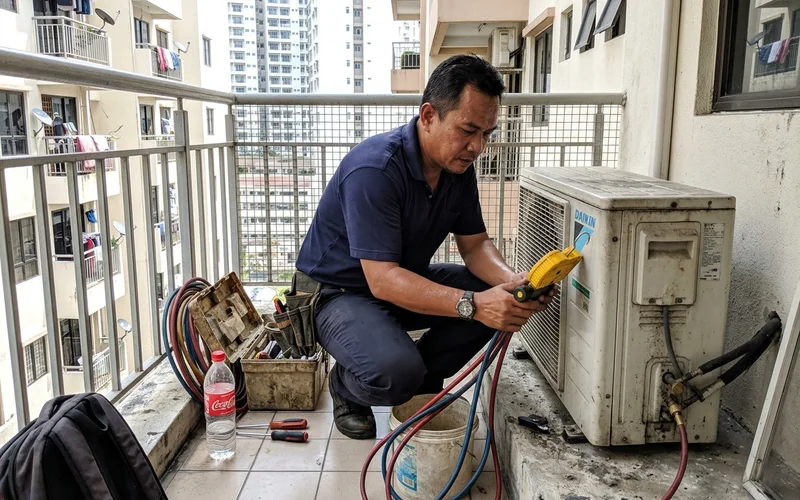
Our standard fix involves a pressure check with a manifold gauge, followed by a leak repair and a proper recharge. You can read our guide on whether your aircon really needs a gas top-up to understand how this process works.
3. A failed run capacitor
The capacitor is a small cylindrical part in the outdoor unit that gives the compressor and fan motor a huge push to start. Malaysian afternoon heat puts massive stress on these electrical components.
We replace blown capacitors daily because outdoor units often bake in direct sunlight. When a capacitor fails, the compressor simply cannot start. The indoor fan still blows, so it feels like the aircon is working, but the air remains completely warm.
You can often identify a bad capacitor if you hear a clicking sound from the outdoor unit every few minutes. Our technicians test the microfarad rating (often 25uF to 35uF) with a multimeter to confirm the fault. Capacitor replacement is an affordable repair that usually takes less than an hour.
4. A compressor or contactor fault
If the capacitor is fine but the outdoor unit still refuses to run, the problem might be the contactor or the compressor itself. The contactor is a heavy-duty electrical switch that feeds high-voltage power to the compressor.
Our specialists use a clamp meter to read the current draw and pinpoint the exact failure. Replacing a contactor is a moderate repair that takes about an hour. A failed compressor on an older non-inverter unit is a much larger and more expensive issue.
We generally suggest buying a new aircon if a non-inverter compressor dies after ten years of use. The complete breakdown in our guide to an outdoor unit that isn’t running goes into specific detail on these symptoms.
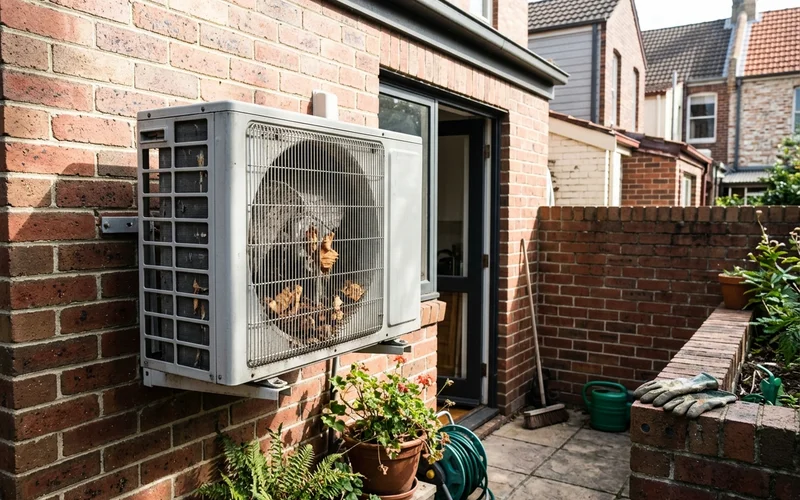
5. A dirty or blocked outdoor unit
The outdoor condenser coil has to release all the heat your system absorbs from your room. Many condo balconies in the Klang Valley are tight, poorly ventilated spaces.
We frequently see outdoor units boxed in by clutter or completely coated in grime. When the metal fins get clogged with leaves or dust, the trapped heat cannot escape. The whole system struggles to cool your room, especially on very hot afternoons when the ambient temperature is high.
You can improve efficiency immediately by clearing the physical space around the condenser. Our professional service teams will wash the outdoor coil thoroughly to restore full airflow.
Inverter units
Inverter aircons may also show a blinking light or an error code when something is wrong. The detailed breakdown in our guide to aircon blinking light error codes explains the common ones by brand.
When It Only Struggles on Hot Afternoons
A very common complaint is that an aircon works fine at night but cannot keep up on hot afternoons. This specific issue does not always mean a part is broken. A few environmental factors are usually at play.
- The heat load is highest: Between 2 pm and 6 pm, the sun on walls and windows adds a massive amount of heat to your home. West-facing rooms and upstairs bedrooms under the roof absorb the most solar radiation. If the unit is barely big enough for the square footage, this is exactly where it falls short. Closing heavy curtains or blinds helps immensely.
- The outdoor unit is struggling too: Condensers sitting in direct sunlight have a much harder time shedding heat. Keeping the area around the unit clear and clean makes a huge difference in afternoon performance.
- A small problem becomes visible: A slightly dirty coil or mildly low R32 gas pressure might cool a room just fine at night. We notice these minor issues only show up as complete failures when the afternoon heat load peaks. A routine service and pressure check will verify this.
- The unit may be undersized: If your system has struggled since the day it was installed, the room simply needs more cooling capacity. The calculations in our guide on what HP aircon you need explains exactly how to check your room size.
Mistakes That Make It Worse
Homeowners often try quick fixes that actually cause more damage to the system. You should avoid these common errors when dealing with an aircon blowing warm air.
- Setting 16°C or 18°C to cool faster: The system does not cool faster at a lower setting. It simply runs longer and can easily freeze a dirty evaporator coil into a block of solid ice.
- Spraying water on the outdoor unit while it runs: Water does not fix the root cause of the overheating. It can permanently damage the sensitive electrical components inside the casing.
- Topping up gas without a pressure check: Overcharging a system strains the compressor just as badly as undercharging it. We strictly measure the pressure with a manifold gauge before adding any refrigerant.
- Waiting weeks to call for help: A failing capacitor or a slow gas leak forces the compressor to work harder every single day. Calling for a repair early prevents a cheap fix from turning into a dead compressor.
Repair or Service: Which Should You Book?
Deciding between a basic service and a specific repair depends entirely on the symptoms.
We use this exact diagnostic matrix to guide our initial phone consultations. This chart helps you book the right service the first time.
| What you notice | Most likely cause | Book | Typical fix time |
|---|---|---|---|
| Weak airflow, dusty filters, musty smell | Dirty coil and blower | Service or chemical wash | 1 to 2 hours |
| Frost on pipes, hissing, slow decline | Low gas from a leak | Repair (leak check) | 1 to 3 hours |
| Indoor fan blows, outdoor unit silent | Capacitor or contactor | Repair | Under 1 hour |
| Outdoor unit hums but fan doesn’t spin | Fan capacitor or motor | Repair | Under 1 hour |
| Cooling fine at night, poor on hot afternoons | Dirty outdoor unit or low gas | Service, then pressure check | 1 to 2 hours |
If you are ever unsure about the symptoms, simply describe what is happening on WhatsApp. Our dispatch team will tell you whether it sounds like a routine service or a mechanical repair.
What a Repair Visit Costs
Repair labour in the Klang Valley is typically RM80 to RM200 depending on the specific fault. This fee applies in addition to any required replacement parts, like a RM45 capacitor or R32 gas.
Our technicians comprehensively check system pressure, amp draw, and electrical wiring. They then quote the full, finalized price before starting any physical work.
We ensure that absolutely nothing changes on the invoice once the cover comes off. Every single repair gets a 7-day follow-up check to guarantee long-lasting performance.
Our team guarantees a fast response within 24 hours, available 24/7 for emergencies. If you are dealing with an aircon not cold emergency, reach out to us today for an immediate fix.