
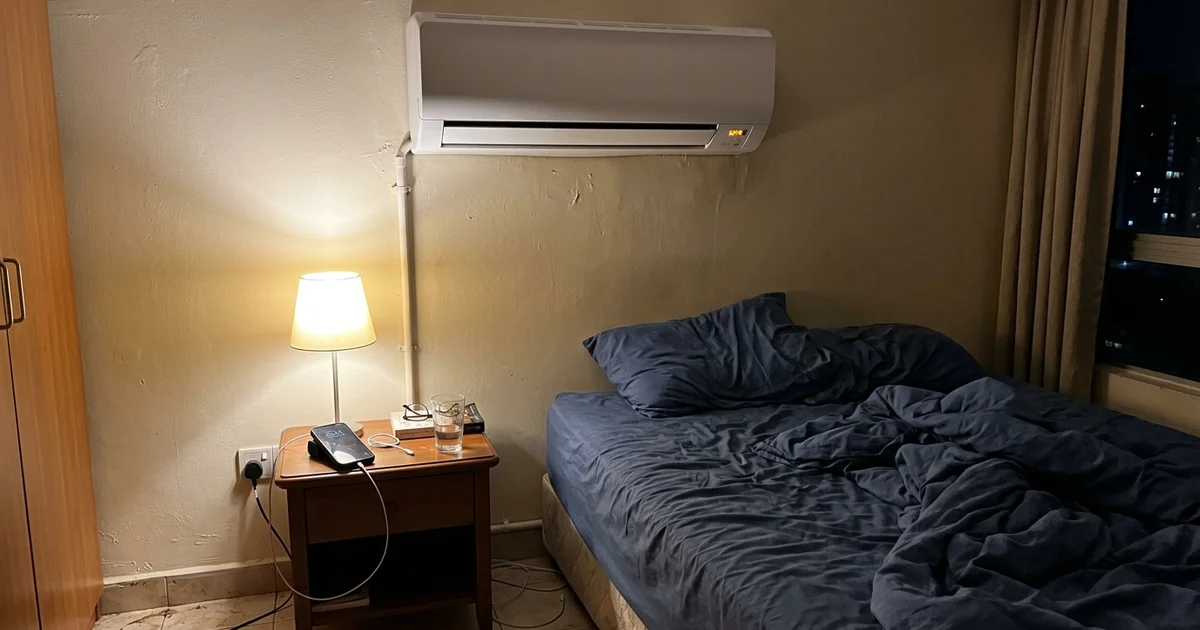
You know that sinking feeling when you reach for the remote, and instead of a blast of cold air, you see that dreaded aircon blinking light. It is a frustrating moment, especially during a scorching Klang Valley afternoon.
Our team completely understands the panic when your system suddenly stops working.
This flashing indicator is actually a built-in safety mechanism designed to prevent further damage. The key takeaway from this data is that interpreting the signal early often separates a cheap fix from a complete overhaul.
We are going to break down what your unit is trying to tell you, which is the exact same starting point our aircon repair team uses for diagnostics. Let’s look at the actual diagnostic steps and explore a few practical ways to respond immediately.
What a Blinking Light Means
Modern air conditioners check themselves constantly. When the control board detects something outside normal limits, it shuts down the system and flashes a light to tell you. This is an active self-preservation mechanism.
Our technicians often find that the microprocessors on the Printed Circuit Board (PCB) monitor sensor data continuously. If they detect abnormal conditions, like an overcurrent situation, they stop the compressor to protect the expensive inverter modules. You will usually see the timer or operation LED blinking on the indoor unit.
The blink itself is actually a specific code. The number of flashes points directly to the part of the system that is struggling.
We use these codes as a valuable starting point for troubleshooting. A blinking light, however, is just a clue rather than a final diagnosis.
First: Try a Safe Reset
Many blinking lights come from a temporary glitch. A sudden power dip during a KL thunderstorm can easily confuse the microprocessor without actually breaking any parts.
Our recommendation is to try a safe hard reset to clear the board’s volatile memory.
- Switch the aircon off with the remote control.
- Switch it off completely at the wall isolator or the breaker in your DB box.
- Wait exactly five minutes to allow the refrigerant pressure to equalize and capacitors to discharge.
- Switch the power back on, wait a minute, and then test the unit.
This simple process fixes many temporary software hang-ups. If the aircon runs normally, keep an eye on it for the next few days.
We consider a fault to be real if the blinking returns within a few hours.
Don’t reset repeatedly
If the breaker trips again, or the light comes straight back, stop resetting immediately. Repeated restarts can permanently damage a compressor motor or a circuit board that is already struggling. Book a professional diagnosis instead.
Common Code Families
Brands use different code systems, but most faults fall into a few predictable families. Knowing which category you are dealing with helps clarify how serious the repair might be.
Our experience shows that communication errors are incredibly common in Malaysia due to high humidity or pests.
| Code family | What it usually means | Typical causes |
|---|---|---|
| Sensor faults | A temperature sensor (thermistor) is reading incorrectly. | Loose connector, damaged sensor, or corrosion. |
| Communication faults | Indoor and outdoor units are failing to exchange data. | Lizard (cicak) shorting the outdoor PCB, or degraded wiring. |
| Compressor protection | System shut down to prevent the compressor from overheating. | Low R32 gas, blocked outdoor coil, or failing motor. |
| Fan motor faults | Indoor or outdoor fan is not spinning at the target RPM. | Worn motor bearings, blocked blower cylinder, or board fault. |
| Inverter power faults | Problem detected in the inverter power circuit. | Blown PCB fuse, voltage spikes, or faulty IPM module. |
| Drain or float faults | Water level is too high in the drain pan (common on cassettes). | Clogged PVC drain pipe, or a failed internal drain pump. |
Brand by Brand: How to Read the Code
Error code tables differ drastically between models, so always check the manual for your exact unit. Getting the specific alphanumeric code saves time before a technician even arrives.
We have compiled the methods for retrieving these hidden codes on the most common systems installed around the Klang Valley.
Daikin
Many Daikin wall units show a blinking green operation lamp when a fault occurs. You can use the “cancel button trick” to find the exact code without needing tools.
Our clients use this method constantly to check their own daikin aircon blinking status.
- Point the remote at the unit and hold the cancel button for about five seconds until “00” appears.
- Press the cancel button repeatedly.
- Stop when you hear a long, continuous beep.
The code on the screen is your fault. The most frequent Daikin error code we see is U4, which indicates a communication failure between the indoor and outdoor units. Other common Daikin codes include A3 for a blocked drain pump and A1 for an indoor PCB defect.
Panasonic
On many Panasonic models, the orange timer light blinks when the system detects an abnormality. Pressing and holding the recessed check button on the remote (using a pen tip) for five seconds activates the diagnostic mode.
Our technicians rely on this hidden panasonic aircon timer light blinking feature daily.
You then press the up or down arrows until the indoor unit beeps continuously. The screen will display a code, such as H11, which is a notorious indoor/outdoor communication error. Another common reading is F91, which warns of a refrigeration cycle problem like a gas leak.
Mitsubishi Electric
Mitsubishi Electric units typically signal faults through the operation lamp flashing in a set pattern. The number of consecutive blinks indicates the specific failure zone.
We frequently encounter a 2-time flash, which points directly to an indoor coil thermistor issue.
A 5-time flash usually means the compressor failed to start properly. A helpful insider tip for Mitsubishi multi-split owners is to check your remote settings. If you accidentally set one room’s remote to “heat” and another to “cool”, the unit will blink to warn you of the operational conflict.
Acson
Acson units generally blink a LED light a set number of times, pause, and then repeat the sequence. Counting the blinks between those pauses gives you the code number matching the fault table in the user manual.
Our team highly recommends downloading the official “Acson Troubleshooting” mobile app on iOS or Android.
This free app lets you look up specific codes instantly, such as E6 for a compressor start-up error.
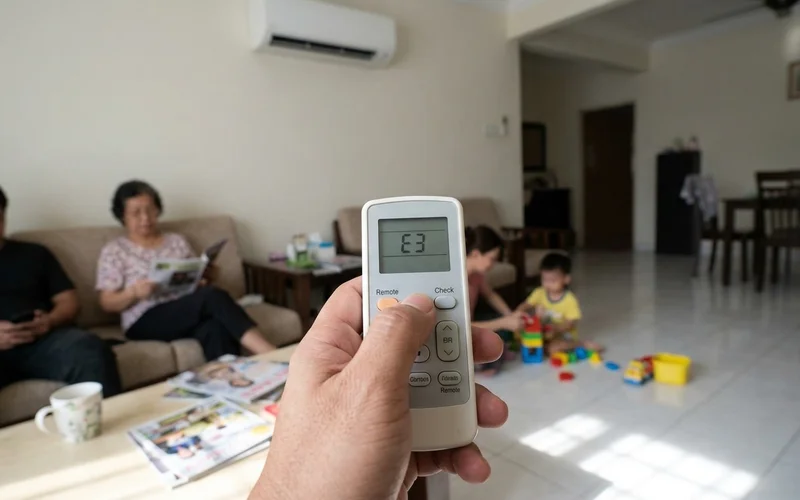
Pro Tip: Whatever the brand, take a short video of the blinking sequence and a clear photo of the model sticker on the side of the indoor unit. Send both files to us via WhatsApp, and that is usually enough information to narrow down the problem before we dispatch a van.
Does Blinking Mean the Compressor Is Gone?
Usually, the answer is no. A blinking light rarely means you need to buy a whole new air conditioner.
Our repair logs confirm that the most common causes are much less dramatic and significantly cheaper to fix.
- A faulty thermistor sensor that has become corroded or dislodged. These are inexpensive parts that we can replace on the spot.
- Damaged wiring between the indoor and outdoor units. Pests, harsh weather, or recent home renovations often sever these communication lines.
- A heavily soiled outdoor unit that triggers a high-pressure protection code. Overheating happens quickly when airflow is blocked.
- Low refrigerant levels caused by a slow leak in the copper piping.
Compressor failures certainly do happen, especially on units older than seven years. They are, however, far from the only explanation for a flashing LED.
Common Situations and What They Usually Mean
These are specific patterns that occur frequently in Malaysian homes. They are not a substitute for professional testing, but they offer great context for what you are dealing with.
- Blinking after a thunderstorm or power cut. This is almost always a temporary glitch caused by a voltage dip. A simple power reset usually clears the memory and restores function. If this happens repeatedly after storms, your PCB might be sensitive to surges. We often recommend installing a dedicated surge protector at the DB box to save the RM300 to RM800 cost of a replacement inverter board.
- Blinking on a hot afternoon, fine at night. This pattern points strongly to a high-pressure protection code. The outdoor condenser is overheating because its coil is clogged with dirt, or it is boxed in with poor airflow. Cleaning the outdoor unit thoroughly and conducting a pressure check are the mandatory first steps.
- Blinking after renovation work. Plaster ceiling installations or painting jobs often disturb the communication wires. The connection between the indoor and outdoor units may have been accidentally severed. We see communication error codes constantly in these exact post-renovation scenarios.
- Blinking with water dripping (ceiling cassettes). Many commercial cassette units contain a small float switch inside the drain pan. When the PVC drain line clogs with algae, the rising water lifts the float. The system then stops cooling and flashes a drain code (like Daikin’s A3) to prevent water from overflowing onto your ceiling.
- Blinking on a newly installed unit. This situation usually points to a loose wiring connection or a sensor that was bumped out of place during the aircon installation. Very rarely, it means the factory shipped a faulty board. New units fall securely under the manufacturer’s warranty, while any installation defects are covered by our 30-day workmanship guarantee.
What Not to Do
Taking matters into your own hands can sometimes turn a minor sensor issue into an expensive disaster. Certain DIY actions will immediately void your warranty or cause permanent electrical damage.
Our top warnings include the following actions.
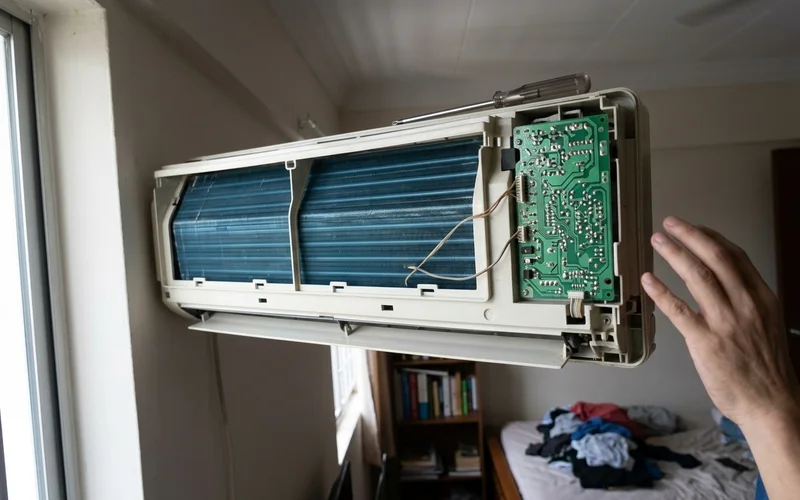
- Do not open the indoor unit’s electrical cover to unplug random connectors. Sensitive circuit boards are easily shorted out by static electricity from your hands.
- Do not bypass a tripped breaker to force the aircon to start. This action can melt the compressor motor windings completely.
- Do not spray water or chemical cleaners directly into the unit while trying to fix a sensor code. Moisture introduced to the PCB will fry the microprocessors instantly.
- Do not reset the system endlessly. If two solid reset attempts fail to clear the error, the mechanical fault is genuine and requires testing.
When to Book a Diagnosis
Some symptoms indicate that the system is completely locked out and requires professional equipment to diagnose. Book a service visit immediately if you experience any of the following scenarios.
- The indicator light resumes blinking immediately after a hard reset.
- The indoor blower fan runs, but the aircon stops blowing cold air completely.
- The main circuit breaker trips the moment the compressor tries to start.
- You notice a burning electrical smell, loud buzzing, or heavy water leakage.
A qualified technician will read the stored code and then confirm the failure using proper diagnostic tools.
We test the sensor resistance in kilo-ohms with a multimeter, check the compressor draw with a clamp meter, and verify the refrigerant levels with a manifold gauge. The blinking code tells the technician where to look first, and these physical tests confirm the exact failing component.
Our comprehensive guide on what to expect from an aircon diagnosis walks you through every step of a standard service visit.
What It Costs
Repair labour generally ranges from RM80 to RM200, depending on the complexity of the fault. You will also need to factor in the cost of any replacement parts. Small components like thermistors are quite affordable, whereas replacement inverter boards and compressor modules carry a much higher price tag.
Our policy is to always provide a full, transparent price quote before we begin any repair work. Technicians service all major air conditioning brands across the Klang Valley with rapid response times.
We also include the peace of mind of a 7-day follow-up check to ensure the system remains stable. If your aircon blinking light is flashing a warning right now, do not wait for the problem to escalate. Reach out to the support line on WhatsApp with a video of the blinking light, and let us help you restore your comfort today.