
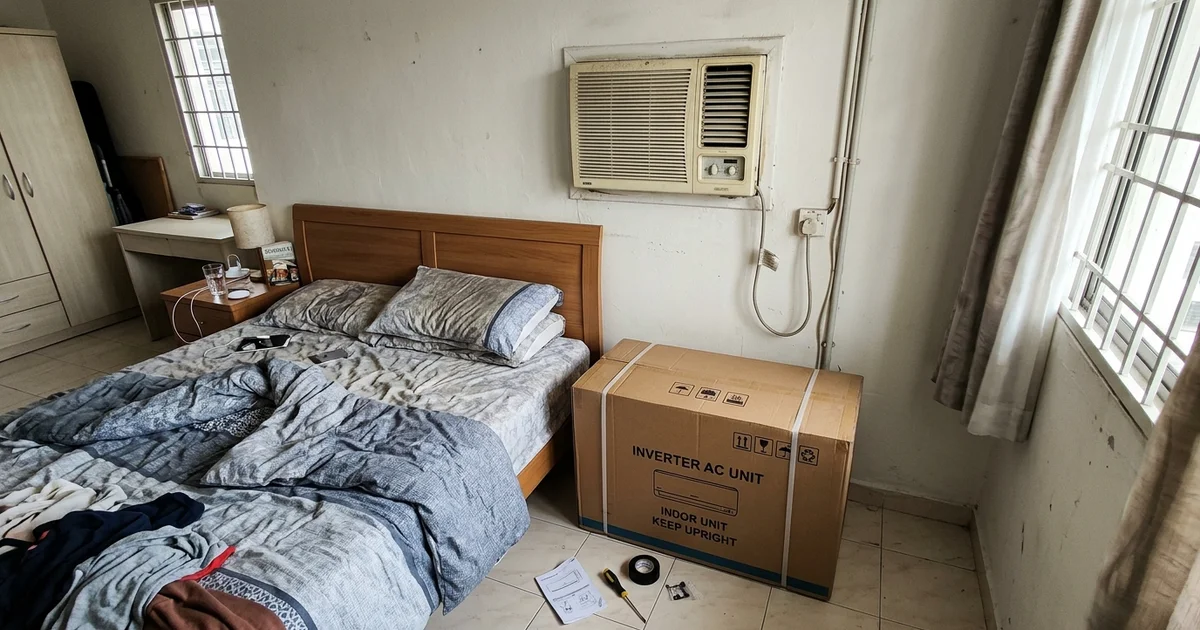
The Honest Way to Decide
Let’s face facts about aging cooling systems in the Klang Valley. Most technicians push for a total replacement the minute an old unit acts up.
We approach things differently at our aircon repair service. A simple capacitor swap or drain fix on a 12-year-old system can often buy you several more years of comfort for a tiny fraction of the cost.
Recent changes to TNB electricity tariffs make the math even more critical for 2026.
Our team looks at four specific data points before giving advice: the fault, the repair cost, the age and condition, and the recent failure rate. Here is how those factors actually tip the scale.
Factor 1: What’s Actually Broken
Not all component failures carry the same weight. Replacing a run capacitor typically costs between RM80 and RM150 in Malaysia. This makes it an easy choice to fix.
Major components present a much harder financial decision.
Usually worth repairing, even on older units:
- Run capacitor
- Contactor
- Drain blockage or leak from aircon jelly
- Thermistor sensor
- Loose or damaged wiring
- Fan blade or mount problems
Worth thinking carefully about:
- Fan motor (indoor or outdoor)
- Refrigerant leak on a very corroded system
- Control board, especially on inverter units
Usually a sign to replace on older units:
- Compressor failure
- Multiple major parts failing together
- Severe corrosion of the coils
We generally advise walking away if the compressor fails. Local compressor replacements often run between RM1,500 and RM1,900 once you include the parts, brazing, vacuuming, and fresh gas. That quoted amount is practically identical to buying a brand new 1.0 HP or 1.5 HP unit.
Factor 2: Repair Cost vs New Unit Cost
Our repair labour fee runs from RM80 to RM200, plus parts. Small components like thermistor sensors keep the total bill incredibly low.
For comparison, let’s examine two current supply prices for new units:
| New unit | Supply price | Installation |
|---|---|---|
| Mitsubishi MSY-JR13VF, 1.5 HP | RM1,525 | From RM280 (1.0 HP base package) |
| Acson AVO Non-Inverter, 2.0 HP | RM1,600 | From RM280 base, more for larger units or longer piping |
A useful rule of thumb provides a quick baseline. If the repair quote exceeds half the price of a new unit, and your current system is over a decade old, replacement makes more financial sense.

Factor 3: Age and Condition
Age matters far less than the physical condition of the hardware. A well-serviced machine can easily run past the 10-year mark. Neglected systems might burn out completely by year seven.
We look for a few specific warning signs that a system is reaching the end of the line:
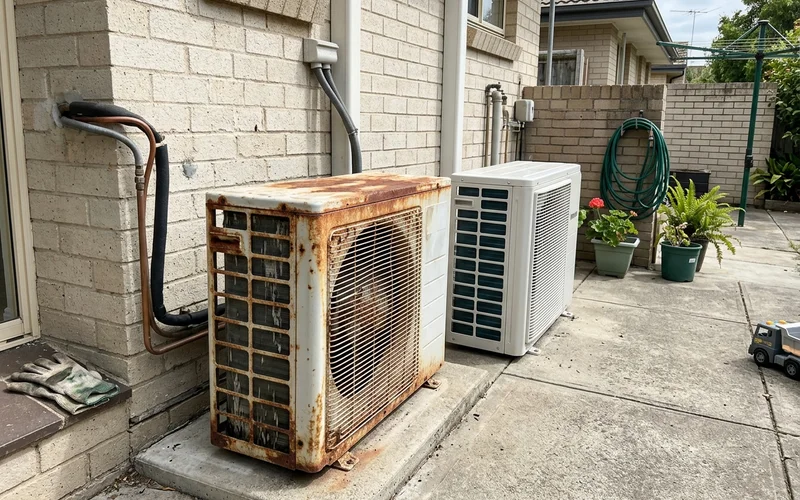
- Old refrigerant. The Malaysian Department of Environment (DOE) is aiming for a complete phase-out of R22 gas by 2030 under Stage III of their management plan. This regulatory squeeze makes R22 increasingly scarce and expensive to top up.
- Rust and corrosion on the outdoor unit casing and coil fins.
- Yellowed, brittle plastic on the indoor unit.
- Parts no longer available for that specific model.
Factor 4: Repeat Failures
One isolated repair in a five-year span is perfectly normal. Three callouts in a single year point to a systemic failure.
We recommend adding up every RM80 diagnostic fee and gas top-up you have paid recently. That wasted cash could easily fund a downpayment on a highly efficient modern model.
The Efficiency Factor
Older non-inverter models operate by switching the compressor fully on and off to maintain the temperature. Modern inverter systems dynamically slow the compressor down once the room cools. This technological shift drastically cuts your monthly TNB bill, especially in bedrooms occupied for eight hours every night.
We see this impact clearly with the recent 2026 TNB tariff updates. The Malaysian government currently grants an electricity bill protection exemption, but it comes with strict limits:
- Households consuming under 800 kWh per month are protected.
- These protected accounts avoid the 3.61 sen/kWh Automatic Fuel Adjustment (AFA) surcharge.
- They also receive an exemption from the 8% Sales and Service Tax (SST).
An inefficient, struggling old unit can easily push your household usage past that 800 kWh threshold. Losing those exemptions causes your monthly expenses to spike rapidly.
Our detailed guide on inverter vs non-inverter aircons breaks down the exact running cost differences. Always verify the Suruhanjaya Tenaga (Energy Commission) energy star label on any new purchase, because more red stars indicate superior energy savings.
Two Real-World Examples
Let’s review two common scenarios to show how this logic applies in practice.
Example 1: The Minor Electrical Fault
A 12-year-old bedroom unit suddenly stopped cooling. The indoor blower operated fine, but the outdoor box remained totally silent.
Our technician tested the electrical load and identified a blown run capacitor. The refrigerant pressure tested normal, and the copper coils remained in fair condition.
A RM120 capacitor replacement solved the issue for a tiny fraction of a new installation. Repairing stood out as the obvious choice, along with a quick chemical wash to clear away built-up dust.
Example 2: The Major Mechanical Failure
A 14-year-old non-inverter living room unit repeatedly tripped the main breaker. This system required gas refills twice in the past 12 months.
We discovered the aging compressor was drawing massive amounts of current, indicating a total mechanical breakdown. The continuous gas loss also pointed to heavily corroded internal coils.
Quoting a compressor replacement and coil patch would hit nearly RM1,600. Buying a brand new, highly efficient 2.0 HP inverter unit made far more sense. The family gained immediate cooling and secured a lower TNB bill.
Questions to Ask Before You Decide
Asking a technician the right questions prevents costly mistakes. Keep this checklist handy during your next service visit:
- What exactly has failed, and why? A precise answer confirms a thorough diagnostic check.
- Is anything else close to failing? An honest technician will warn you about worn fan motors or rusted brackets.
- What would a suitable new unit cost, installed? Compare the repair quote directly against a full replacement package.
- Does the repair carry any warranty? Some parts feature manufacturer coverage, and standard local repairs often come with a 7-day follow-up check.
- Is the refrigerant still easy to get? Remember that R22 supplies will vanish entirely by 2030 in Malaysia.
A Quick Decision Table
| Situation | Our usual advice |
|---|---|
| Small part failed, unit under 10 years, no repeat issues | Repair |
| Small part failed, unit over 10 years, otherwise healthy | Repair |
| Compressor failed, unit under 5 years | Repair, check the manufacturer’s warranty |
| Compressor failed, unit over 10 years | Replace |
| Third major repair in 12 months | Replace |
| R22 unit leaking gas repeatedly | Replace |
We promise absolute transparency. The service technician will always display the repair quote and the replacement estimate side by side.
What we promise
We will show you the repair price and the replacement price side by side. If the fix offers the better value, that is exactly what our technician will recommend.
If You Decide to Replace
Our aircon installation team supplies and fits nine major brands. Packages start from RM280 for a 1.0 HP setup, including up to 10 feet of copper piping.
We size the replacement properly for your specific room dimensions. The crew can safely dispose of the broken hardware if you request it, and every installation carries a strict 30-day workmanship warranty.
Still feeling unsure about your next move? Send a quick WhatsApp message detailing the brand, rough age, and the current symptoms.
We will review the details and provide a completely straight answer.