
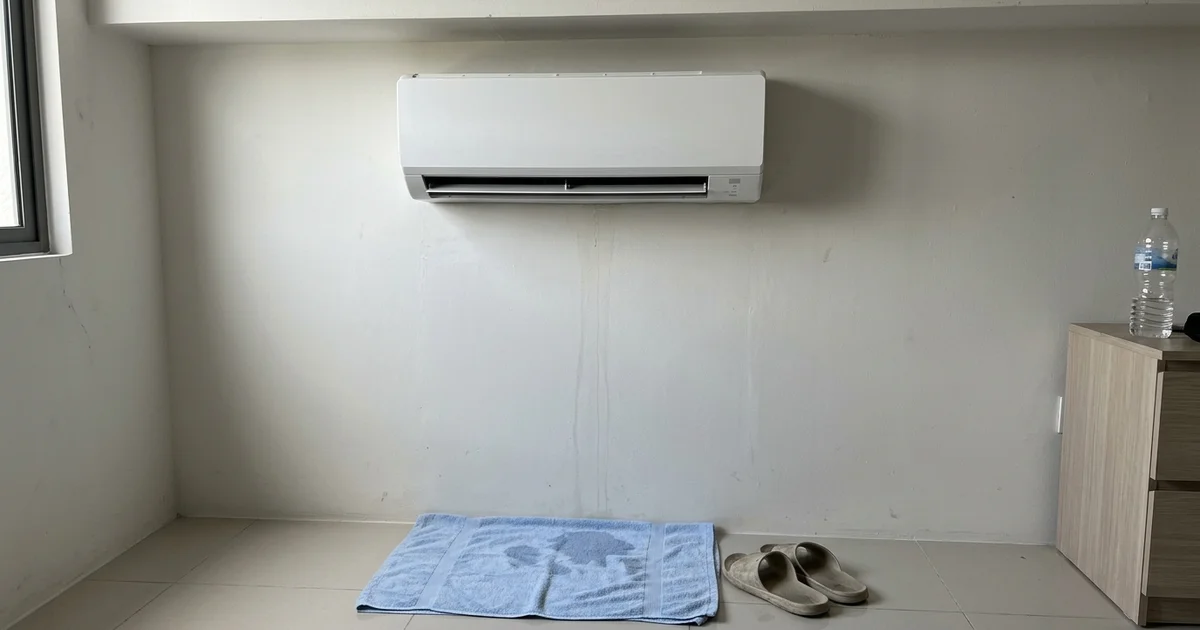
Why Water Ends Up on Your Wall
We see it every day across the Klang Valley: a beautiful, newly painted wall ruined by an aircon leaking water.
The problem starts with basic condensation.
In Malaysia, the average humidity hovers around 80 percent year-round. This means a single bedroom unit can pull up to three litres of moisture from the air daily.
Our aircon repair team handles dozens of these specific calls every week. You can usually fix the issue quickly if you know exactly what is causing the blockage. Let’s break down the data behind these leaks and look at five practical ways to solve them.
1. A Clogged Drain and “Aircon Jelly”
This is the most common reason water spills into your room. The drain pan inside your unit collects moisture, creating a dark, damp environment. We constantly find a thick, slimy substance blocking these trays during our service calls. This bio-slime, commonly known as an aircon jelly drain clog, is a mix of dust, skin cells, and Pseudomonas bacteria.
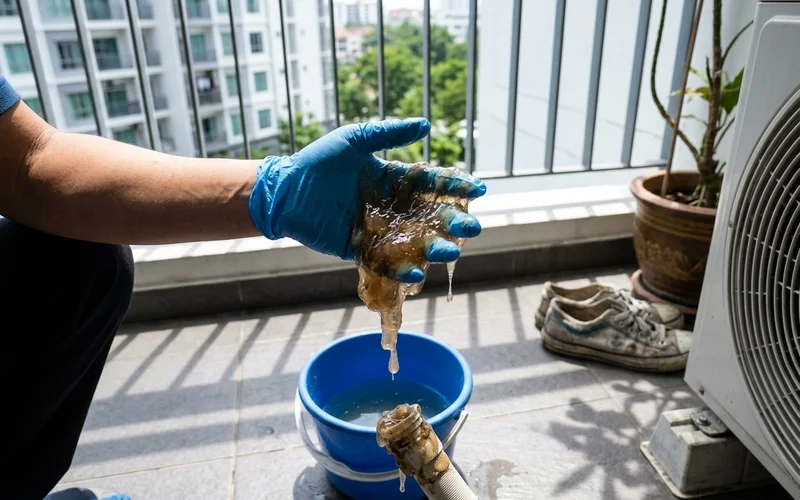
A minor clog will cause a slow drip that progressively worsens over a few days. The blockage can grow from a thin film to a solid plug in just three to four months. Our recommendation for a heavy buildup is a full chemical wash. This deep clean uses specialised alkaline solutions to dissolve the jelly from the pan, coil, and blower.
Signs to watch for:
- A sour, musty smell when you turn the unit on.
- Water marks forming directly under the indoor unit.
- A slow drip that continues even after switching the unit off.
2. A Dirty Blower or Coil
When dirt coats the internal parts, water cannot flow smoothly into the collection tray. The airflow drops significantly, and moisture beads up on the dusty surfaces. We often see units spitting tiny water droplets directly out of the front louvres because of this. The cross-flow fan catches these loose droplets and fires them into the room like a spray bottle.
A thick layer of PM2.5 haze particles and household dust is usually the culprit. Your system needs an unrestricted path for the condensation to fall naturally. Our standard procedure here is to chemically flush the evaporator coil to restore proper water flow. You can easily test this yourself by holding a dry tissue near the air vent. If the tissue gets damp within seconds, the internal components are heavily soiled.
3. A Frozen Coil
A layer of ice on your evaporator coil will overwhelm the drainage system once it melts. This freezing usually happens because of restricted airflow or a significant drop in refrigerant pressure. We frequently discover solid blocks of ice several centimetres thick inside malfunctioning units. The ice melts all at once when the compressor cycles off, releasing a sudden gush of water.
This rapid melting fills the drain pan much faster than the small PVC exit pipe can drain it. Low R32 or R410A gas levels are prime suspects for this freezing behaviour. Our technicians will always check the gas pressure after cleaning the filters. You should switch your unit to fan-only mode immediately if you suspect ice buildup. This simple action melts the ice slowly and safely prevents a massive indoor flood.
4. A Tilted Installation
An indoor unit must sit perfectly level to ensure water flows correctly toward the exit pipe. If the mounting bracket shifts, water will pool at the wrong end of the tray and eventually spill over. We occasionally find units that have sagged slightly on one side over the years. This happens frequently in humid climates where cheaper metal brackets begin to rust and warp.
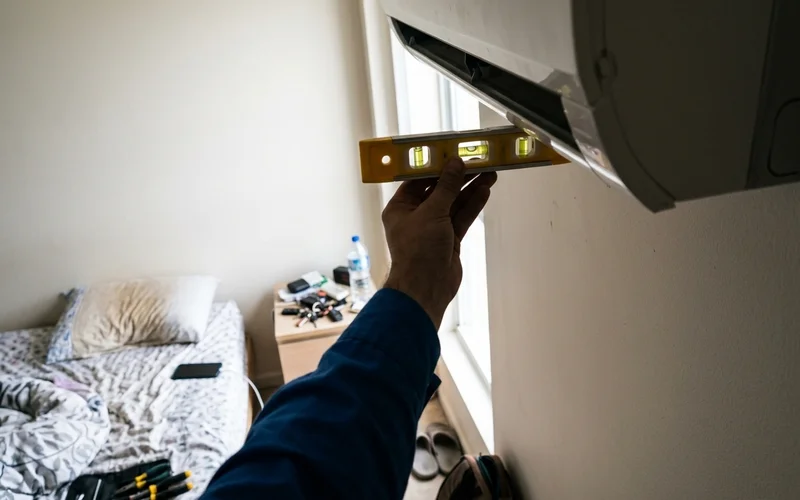
Even a two-degree tilt away from the drainage hole is enough to cause a persistent leak. The clearest sign of a tilt is water dripping consistently from the same corner, even immediately after a thorough cleaning. Our repair process involves remounting the backplate and securing it with heavy-duty wall plugs. You can verify the angle yourself by placing a standard 30-centimetre spirit level on top of the plastic casing.
5. A Damaged or Badly Routed Drain Pipe
Water cannot drain if the exit pipe is crushed, kinked, or routed at an upward angle. A correct aircon installation requires a steady downward slope for the entire length of the pipe. We fix many routing issues in homes that recently completed plaster ceiling renovations. Builders sometimes accidentally compress the hidden PVC drain pipe while installing new lighting fixtures.
A standard air conditioning drain requires a minimum downward drop of one centimetre for every metre of pipe. Any flat spots in the line will trap water and encourage rapid mould growth. Our typical solution is to cut out the damaged section and install a new, correctly angled pipe.
Quick check you can do
Look at where the drain pipe comes out, usually outside near the outdoor unit or into a floor trap. If no water is coming out while the aircon runs, the drain is blocked.
Leaks From Ceiling Cassettes
Ceiling cassettes handle condensation differently than standard wall units, making leaks a bit more complex. These commercial-style units sit flat in the ceiling and rely on a small internal pump to push water upwards and out. We service hundreds of these units from brands like Daikin and Acson in offices and larger homes. The water will overflow into the ceiling cavity if this tiny condensate pump fails or gets clogged with slime.
Many modern cassettes feature a built-in float switch that triggers an error code and shuts down the compressor to prevent flooding. Unfortunately, this safety feature does not always activate fast enough to stop the initial spill. Our commercial clients often realise there is a problem only when a brown water stain appears on the ceiling board.
Fixing water damage on a plaster ceiling can easily cost RM 700 or more in the Klang Valley. You should listen closely for a faint grinding noise when the unit runs. This sound often indicates a struggling pump motor that needs immediate replacement before it fails entirely.
Leaks That Only Happen Sometimes
Intermittent leaks are frustrating because they seem to happen without a clear reason. The timing and specific conditions of the leak offer strong clues about the underlying problem. We use these patterns to diagnose tricky issues quickly. Here is a breakdown of what these sporadic drips usually mean.
During Heavy Rain or High Humidity
Your unit works overtime to remove moisture on days when the humidity spikes above 85 percent. A partially restricted drain pipe simply cannot flow fast enough to handle the extra volume of water. We regularly see trays fill up and overflow within minutes under these exact conditions. Clearing the main drain line completely resolves this issue.
After the Unit is Switched Off
This timing strongly points to an ice buildup on the cooling coil. The ice forms while the compressor is running but cannot melt until the system is turned off. We know this sudden rush of melting water quickly overwhelms the plastic drain pan. Checking the refrigerant levels and cleaning the primary filters will stop this freezing cycle.
On Maximum Fan Speed
Water droplets sometimes blow directly off a heavily soiled coil before they can drip into the tray. The high velocity of the fan catches these loose beads of water. Our chemical flush removes the dirt barrier and allows the water to run smoothly again. You will notice an immediate difference in the airflow.
Right After a DIY Service
You might have accidentally misaligned the drain pan while reassembling the plastic cover. The thin drainage hose can also get pinched if it is not pushed back into its exact slot. We advise homeowners to always double-check the hose connections if a unit starts leaking within 24 hours of a cleaning session.
Is It Urgent?
Yes, you should treat an aircon dripping water inside as an immediate maintenance emergency. A minor drip can cause thousands of ringgit in secondary damage within just a few days. We constantly see ruined furniture and dangerous electrical situations that could have been avoided. Here are the specific risks of ignoring a leak:
- Electrics: Water pooling near 240V power sockets or the internal circuit board is a severe fire hazard.
- Ceilings: Plasterboard absorbs water rapidly, leading to sagging, yellow stains, and eventual collapse.
- Furniture: Melamine wardrobes and particleboard cabinets will swell and warp permanently within 48 hours of soaking.
- Walls: Constant moisture causes paint to bubble and creates a perfect breeding ground for toxic black mould.
You must turn off the main isolator switch on the wall, not just the remote control. Place a wide tray under the unit immediately to catch the remaining drips.
How Much Does It Cost to Fix?
Repair costs depend entirely on whether you need a simple flush or a complex part replacement. We maintain transparent, flat-rate pricing so you know exactly what to expect before the work begins. The standardisation of these rates across the Klang Valley ensures fairness for every customer.
| Cause | Usual fix | Cost |
|---|---|---|
| Light drain blockage | Drain flush during a basic service | RM 80 normal service |
| Heavy aircon jelly, dirty coil | Full chemical wash of all parts | From RM160 per unit |
| Frozen coil from low gas | Leak repair and R32/R410A recharge | Labour RM 80 to RM 200 plus gas |
| Tilted unit or bad drain routing | Re-level bracket or replace PVC pipe | Labour RM 80 to RM 200 |
You will always receive a confirmed price quote from the technician after the initial diagnosis. Our crews respond within 24 hours, seven days a week. A mandatory 7-day follow-up guarantee is included with every job to ensure your wall stays perfectly dry.
Preventing It From Happening Again
Routine maintenance is the only guaranteed way to stop water leaks before they start. A residential unit used daily requires a basic cleaning every six months to keep the condensation flowing. We strongly advise our commercial clients to schedule cleanings every three to four months due to heavier dust loads.
Taking out the primary plastic filters and washing them under a tap every two weeks prevents the coil from freezing. An annual alkaline chemical wash is necessary to stop the gelatinous bio-slime from forming in the pan. You can always WhatsApp us a quick photo of your leaking unit. Our support staff will review the image and give you an immediate assessment of the likely cause.