
The Myth: “Your Aircon Need Gas Top Up Every Service”
We hear the same story every week from Klang Valley homeowners wondering if their aircon need gas top up appointments immediately. A technician claims the unit is empty, so they charge for an AC gas top-up without checking why it happened. This common practice ignores the reality of how these systems actually function.
Our team knows that air conditioners do not simply “use up” their refrigerant.
The chemical circulates in a completely sealed copper loop, meaning a properly installed pipe system can easily last 20 years without dropping pressure. A genuinely low reading indicates a physical leak, and we will explain exactly how to verify this before you spend a single Ringgit.
Real Signs of Low Refrigerant
We look for very specific physical and electronic clues to confirm an aircon low refrigerant situation. Modern inverter units often diagnose themselves before you even notice a temperature drop. For example, Daikin units will flash a “U0” error code, while Panasonic systems typically show “F91” on the display.
Here are the confirmed signs aircon low gas problems are actively occurring:
- Specific error codes like Daikin’s U0 or Panasonic’s F91 indicating a cycle abnormality.
- Weak cooling that fades gradually over several weeks, rather than a sudden breakdown.
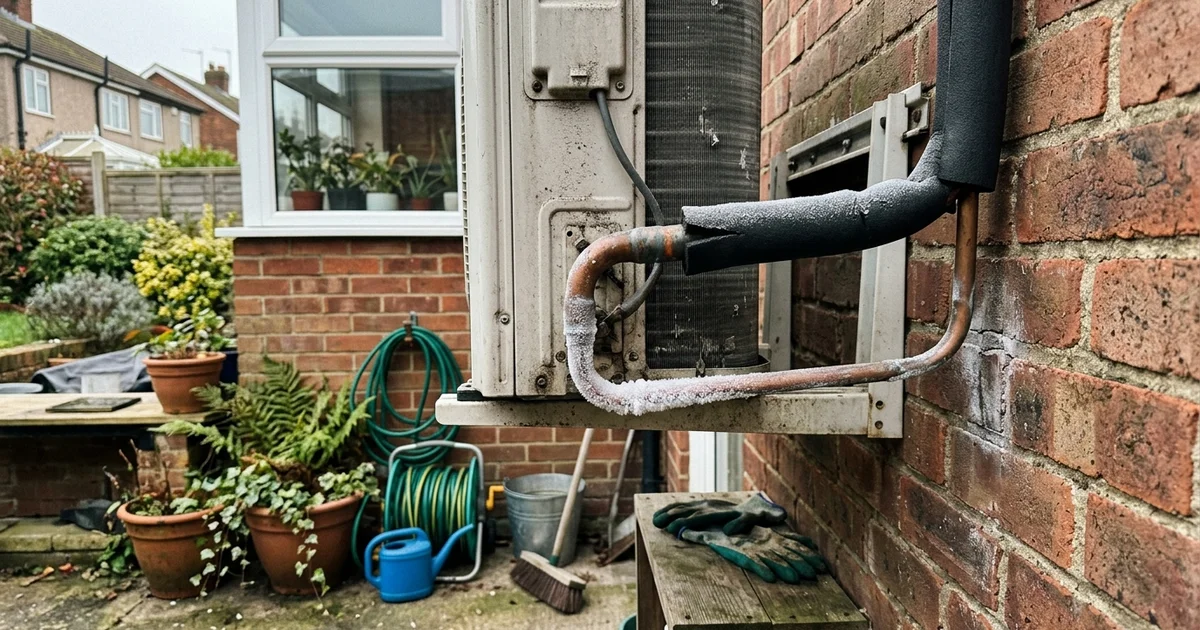
- Frost or ice buildup on the thicker copper pipe connecting to the outdoor condenser.
- Continuous compressor operation where the outdoor unit runs for hours without cooling the room.
- Audible hissing or bubbling noises near the indoor blower or along the copper piping.
- Excessive water dripping inside the room when the frozen evaporator coil finally melts.
Our technicians often find that customers ignore the gradual loss of cooling until the ice forms. This delay puts massive strain on the compressor and increases electricity bills significantly.
Symptoms That Look Like Low Gas, But Aren’t
We regularly encounter dirty machines that perfectly mimic a completely empty system. A thick layer of dust on the blower fan restricts airflow so severely that the indoor coil freezes solid. This frozen coil looks identical to a genuine pressure failure.
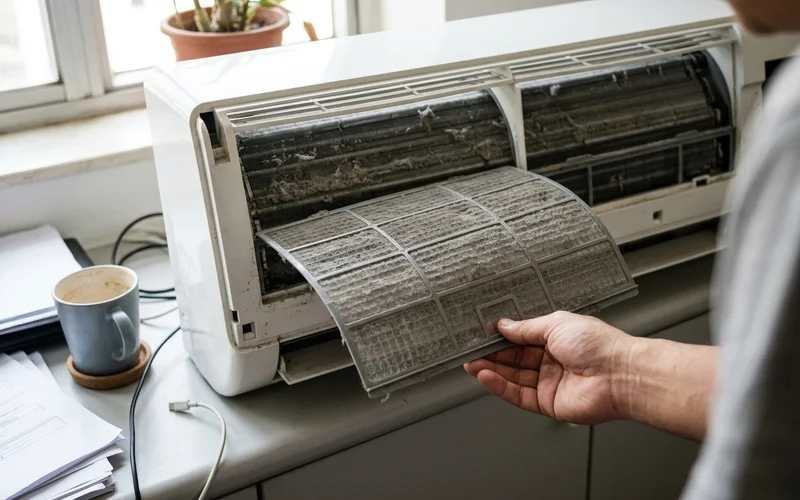
Our diagnostic process always rules out these lookalike issues first to avoid costly misdiagnoses.
| Symptom | Could be low gas | Could also be |
|---|---|---|
| Weak cooling | Yes | Dirty filter or coil, failed capacitor |
| Frost on the coil or pipes | Yes | Very poor airflow from a clogged coil or blower |
| Warm air | Sometimes | Outdoor unit not running at all |
| Long run times | Yes | Dirty outdoor unit, undersized aircon |
Guessing the cause based on a single symptom is a guaranteed way to waste money. Pumping extra R32 or R410A into a unit that simply needs a chemical wash creates dangerous internal pressure. This overcharging forces the compressor to work harder and dramatically shortens its lifespan.
We highly recommend reading our guide on why your aircon is not cold to understand all the common causes.
How a Pressure Check Works
We rely on exact gauge measurements rather than guesswork to determine the health of your cooling system. A proper pressure test compares the live readings against the manufacturer specifications for that exact gas type. This objective data tells the true story of your unit.
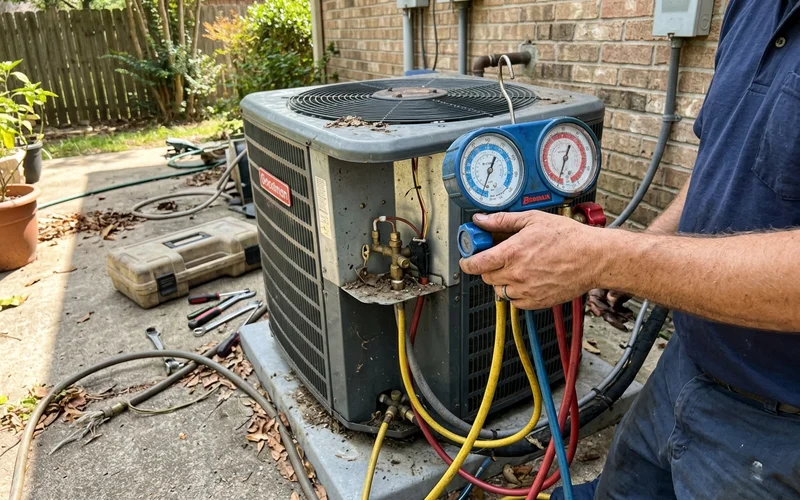
- The technician connects a manifold gauge directly to the service valve on the outdoor unit.
- The aircon runs on full cooling mode for at least ten to fifteen minutes to let the system stabilize.
- The gauge measures the exact suction pressure. A typical R32 split system should read between 110 and 130 PSI on a normal Malaysian afternoon.
- They also verify the saturation temperature and check the physical pipe temperatures to confirm the cooling cycle.
Our findings determine the exact next steps for the repair. An accurate 120 PSI reading means your gas is perfectly fine, so the technician must investigate airflow or electrical faults instead. A reading below 90 PSI confirms a shortage, which immediately triggers a search for the leak.
Our rule
Pressure check first, every time. We only top up when the reading says the gas is genuinely low, and we’ll tell you if there’s a leak behind it.
If Your Gas Is Low: Leak First, Then Top Up
We refuse to refill an empty system without first conducting a proper leak search. Refilling a punctured pipe is exactly like inflating a flat tyre with a nail still stuck in the rubber. The new gas will simply escape again within three to six months, forcing you to pay another RM150 or more for the exact same service.
Our comprehensive guide on why aircons keep losing gas breaks down the most frequent failure points. A reliable repair always involves a strict sequence of steps to protect your machine:
- Electronic leak detection to pinpoint the exact failure along the copper lines.
- Nitrogen pressure holding for 15 to 30 minutes to verify the repair is completely sealed.
- Vacuum evacuation to remove harmful moisture from the system before adding new chemicals.
We evacuate the lines and recharge the exact weight of R32 or R410A specified on the machine’s nameplate once the repair is secure. A standard standalone refill comes with a 1-month warranty for your peace of mind. Many Klang Valley customers opt for a Complete Overhaul instead, which costs RM180 to RM220 and includes a complimentary refill alongside a deep chemical wash.
Quick Checks Before You Call
We recommend performing three fast visual inspections before booking a service appointment. These simple steps can save you the cost of a callout fee if the issue is just basic maintenance.
- Check the error codes. Look for blinking timer lights or specific codes like U0 (Daikin) or F91 (Panasonic) on your remote.
- Wash the indoor filters. Run them under cold water to remove dust blockages, as this often restores normal airflow immediately.
- Inspect the outdoor condenser. Verify the large fan is actually spinning and check the thick copper pipe for white frost.
- Listen closely. Stand near the indoor blower and the external pipes to check for faint hissing sounds.
Our support team is ready to evaluate your findings via WhatsApp to provide immediate advice. An accurate quote follows the physical pressure test, ensuring you only pay for the exact volume of R32 or R410A required. You will always approve the final price before a single drop of gas goes into your machine.
We know that dealing with an uncomfortably warm room is frustrating.
Determining if your aircon need gas top up service shouldn’t be a guessing game that costs you extra money.
Send our Klang Valley support team a message today to schedule a transparent, data-driven pressure check.