
Two Types, Two Kinds of Space
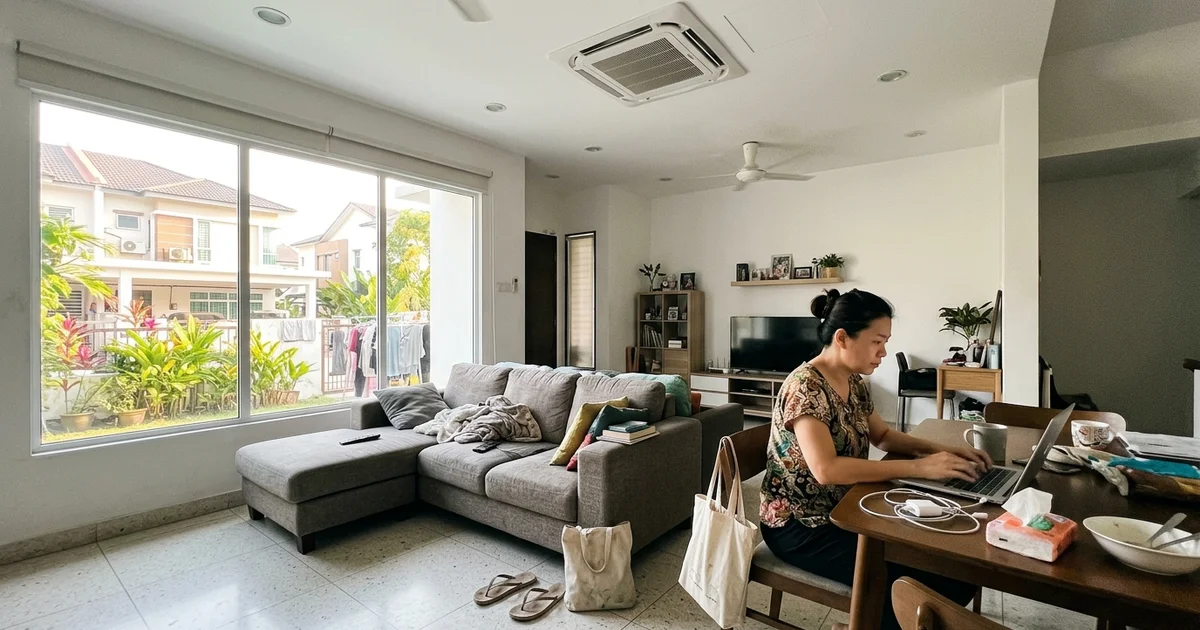
We often see homeowners struggle with the wall mounted vs cassette aircon decision when cooling long, narrow spaces in terrace houses.
That 20-foot open-plan living and dining area is a prime example.
Most Malaysian homes default to the standard wall-mounted split unit, but this often leaves the kitchen end uncomfortably warm.
A ceiling cassette, which sits flush inside a plaster ceiling, offers a completely different airflow approach by pushing cool air in four directions.
Let’s look at the data, what it actually means for your daily comfort, and then explore the costs to help you choose the right system before booking an aircon installation.
Wall Mounted vs Cassette Aircon: Side-by-Side Comparison
| Feature | Wall-mounted split | Ceiling cassette |
|---|---|---|
| Typical rooms | Bedrooms, small to medium living rooms | Large open-plan areas, offices, cafes |
| Airflow | One direction, from a single wall | 360-degree or four directions, from the ceiling centre |
| Ceiling required | None (mounts directly on brick or concrete) | False plaster ceiling with at least 300mm void depth |
| Visible profile | Bulky unit extending 200mm+ from the wall | Flush with the ceiling, protruding only around 30mm |
| Installation cost | Basic packages start around RM280 | Starts around RM450 to RM500 for a standard 1.5HP unit |
| Chemical wash price | RM160 to RM280 | RM270 to RM650 |
| Maintenance effort | Easy reach with a short 3-step ladder | Needs a 5-step ladder, panel removal, and furniture shifting |
Airflow and Coverage
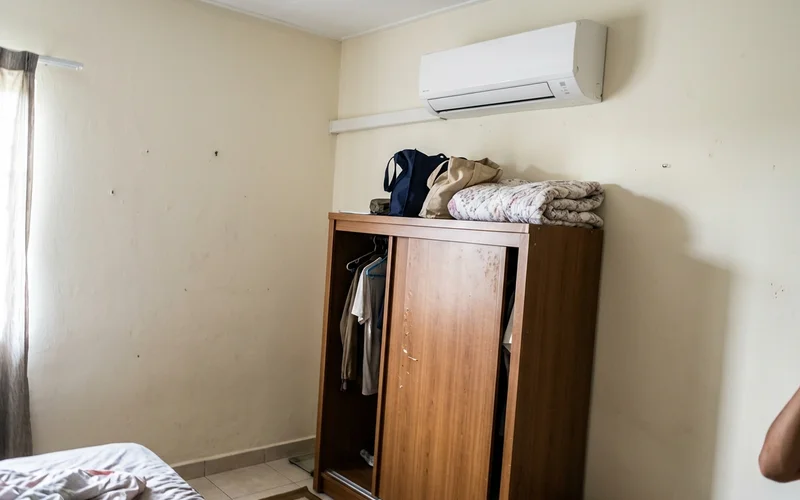
Our technicians frequently see the limits of wall units in standard Klang Valley terrace houses. A standard wall unit pushes air from one side, which works perfectly for a 150 sq ft master bedroom.
However, in a long open-plan living area, that one-directional blast simply cannot reach the dining boundary effectively. We recommend cassettes for these larger zones because they offer a superior 360-degree airflow pattern.
Modern units like the Panasonic NX Series use 3D fan blades to throw air up to 5 metres across the room. This even distribution eliminates those harsh cold spots right under the blower and keeps the entire space at a consistent temperature.
Ceiling Requirements
Our site surveys always begin by checking your existing ceiling height. This measurement is usually the strict deciding factor for local homeowners. A cassette requires a plaster or plasterboard false ceiling with a significant void above it to hide the machinery.
Most standard 4-way cassettes, like the Daikin FCFC series, require a minimum clearance depth of 260mm to 300mm inside that void. We caution condo owners about this requirement specifically. The average Malaysian condo ceiling starts at roughly 8.5 to 9.5 feet high, and dropping it by another foot just to fit a cassette often makes the room feel cramped and claustrophobic.
This is often the deciding factor. A cassette sits inside the ceiling, so you need:
- A false ceiling (plaster or board) with at least 300mm of void space
- Enough depth in the void for the unit body, which varies slightly by model and HP
- A route for the piping and drain through the ceiling to the outdoor condenser
- Access for future servicing and chemical washes
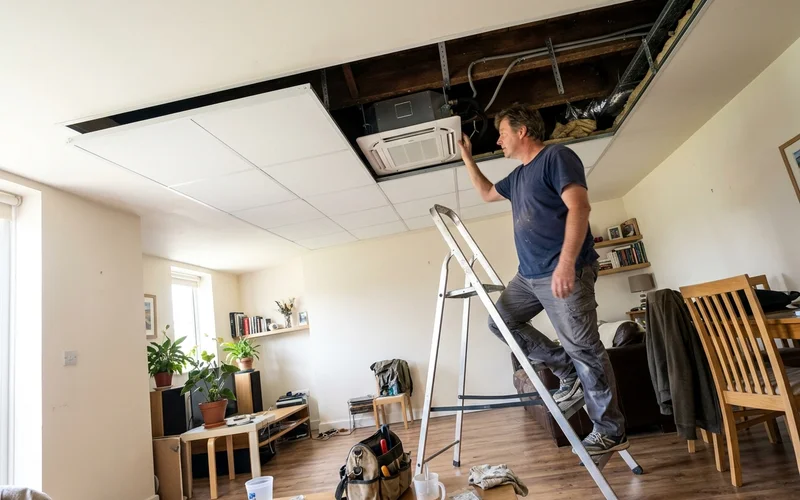
If you are renovating a landed home with a standard 10-foot or 11-foot ceiling, you have the perfect canvas for a cassette upgrade. Adding one to an existing ceiling later is possible but requires cutting into the plaster and patching it up.
Looks
Wall units dominate visual space, and placing a large white box above your main living room sofa rarely matches a modern interior. A cassette aircon for home use solves this aesthetic problem by remaining incredibly discreet.
Our interior design partners prefer cassettes because they free up valuable wall real estate. A premium model like the Panasonic 4-Way Cassette protrudes just 33.5mm from the ceiling surface, leaving only a sleek grille visible.
This flush finish allows you to build floor-to-ceiling wardrobes or display cabinets without having to work around an unsightly plastic blower.
Installation and Long-Term Costs
We always remind clients that the upfront installation fee is only part of the financial picture. Keep these long-term factors in mind:
- Installation. Wall units remain the budget-friendly champion. Our basic package starts at RM280 for a 1.0 HP wall unit within 10 feet of piping. Cassette installations are more demanding and typically start around RM450 to RM500 for a standard 1.5 HP unit. This higher price reflects the custom ceiling work, the mandatory drain pump, and the longer piping routed through the ceiling structure.
- Cleaning. Over the life of the unit, routine maintenance adds up quickly. A cassette chemical wash costs RM270 to RM650 depending on the horsepower, compared with just RM160 to RM280 for a wall split. Our guide on ceiling cassette chemical washes explains exactly what that tedious ladder work and panel removal involves.
- Repairs. Cassettes feature a built-in drain pump that can provide up to 590mm of lift to move condensation away. Wall units rely on simple gravity drains and do not have this mechanical part. If a cassette pump fails or clogs due to skipped servicing, water will overflow directly onto your plaster ceiling and cause expensive property damage that needs an urgent aircon repair.
A common combination
Many larger homes use both: a cassette for the open-plan living and dining area, and wall units in the bedrooms. That gets the even coverage where it’s needed and keeps costs down elsewhere.
Servicing Over the Years
It pays to think about the long-term maintenance routine before you finalize your purchase. The physical location of the unit drastically changes the effort required to clean it:
- Wall units are incredibly straightforward and usually accessible with a simple 3-step ladder. A normal service or chemical wash is fast, requires minimal dust sheet setup, and the bed or TV console below is easy to protect.
- Cassettes demand a 5-step or 6-step ladder to reach the typical 10-foot landed house ceiling. The technician must completely remove the 4-way louver panel and rig a customized catchment bag directly from the ceiling mount. Because the unit sits centrally in the room, you will likely need to shift heavy coffee tables or dining sets out of the way before the wash begins. This extra prep work explains why the chemical wash costs significantly more.
We highly advise scheduling cassette maintenance for a closed day or after business hours if you run a shop. At home, a Saturday morning appointment is usually the least disruptive option for your family.
A Quick Way to Decide
We boil the ceiling cassette pros cons down to three practical questions during our initial site visits. Keep these factors in mind as you evaluate your own rooms:
- Do you have a false ceiling with at least 300mm of void space? If you live in a standard condo with concrete ceilings and no plans to renovate, a wall unit is your only practical option.
- Is the space larger than 400 sq ft and open-plan? If yes, a central cassette will eliminate the hot spots that a single wall unit leaves behind in long terrace house layouts.
- How critical is a minimalist aesthetic? If sacrificing wall space for a bulky white box ruins your interior design plans, the flush 33.5mm profile of a cassette justifies the higher installation price.
Best-Fit Rooms for Each
Choose a wall-mounted split for:
- Bedrooms and private studies
- Small to medium living rooms under 400 sq ft
- Standard condos with 8.5ft ceilings and no false ceiling
- Projects with tighter hardware and maintenance budgets
Choose a ceiling cassette for:
- Large open-plan living and dining areas requiring 360-degree airflow
- Terrace homes being renovated with a new 10-foot false ceiling
- Offices, clinics, boutique cafes, and retail shops
- Spaces where freeing up wall real estate for tall cabinets is a priority
Getting Advice for Your Space
We know that making the final wall mounted vs cassette aircon choice for a specific room layout can feel confusing.
Send a quick WhatsApp message with your room measurements, ceiling height, whether there is a false ceiling, and a few photos of the space.
Our team will recommend the exact type and horsepower that suits your property, and we will quote the supply and installation costs upfront.
Every installation includes a solid 30-day workmanship warranty and a scheduled 7-day follow-up check to ensure everything runs perfectly.