
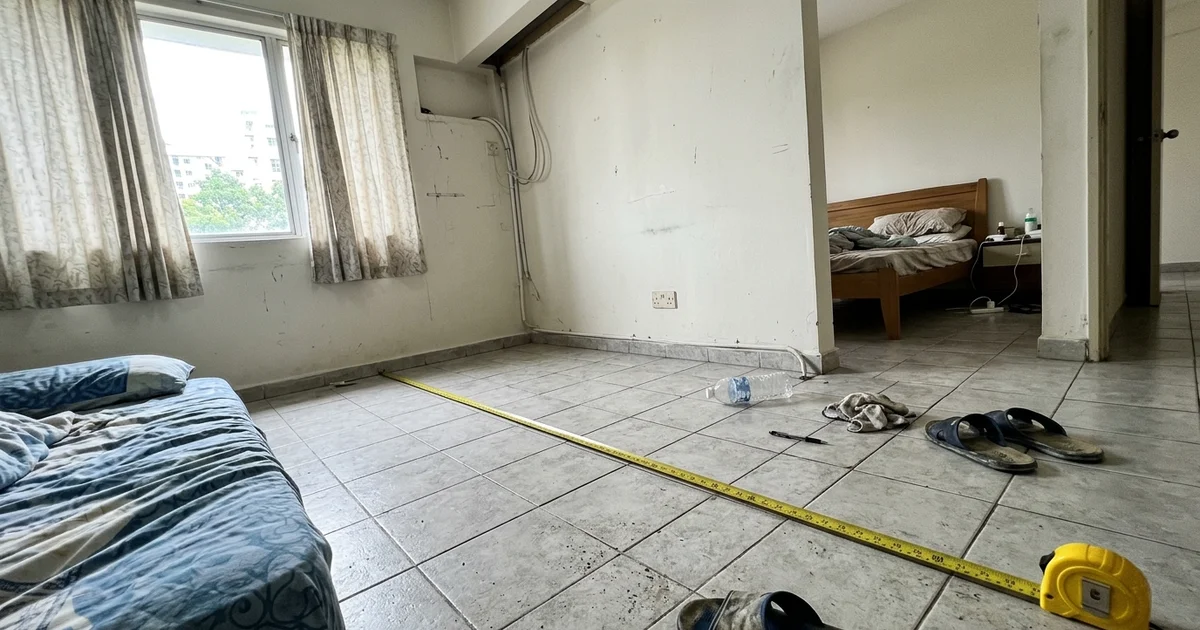
You know how frustrating it is when a new appliance fails to deliver on its promises. We constantly see homeowners overspend on massive cooling systems, only to end up with a cold but clammy room.
Getting the capacity right is your best defense against both discomfort and wasted money.
Before booking an aircon installation, spending a few minutes to figure out exactly what hp aircon do i need will save you years of high bills. The 2026 TNB tariff changes make efficient cooling more critical than ever. Let’s decode the sizing process, look at the actual data, and walk through exactly how to choose the perfect unit for your space.
Why Getting the Size Right Matters
Choosing the correct horsepower (HP) ensures your room reaches the target temperature quickly without wasting electricity. Our technicians consider buying the wrong size aircon to be the most common, and most expensive, mistake possible.
The good news is that this error is incredibly easy to avoid. Aircon capacity is sold in HP in Malaysia, but what actually matters is the cooling capacity measured in BTU per hour.
We rely on a standard baseline for these conversions. As a rough guide:
- 1.0 HP gives about 9,000 BTU/hr
- 1.5 HP gives about 12,000 BTU/hr
- 2.0 HP gives about 18,000 BTU/hr
- 2.5 HP gives about 22,000 to 24,000 BTU/hr
Exact figures vary between brands and models, so you must always check the specification sheet. For example, popular 2026 units like the Panasonic X-Deluxe often push slightly above 9,000 BTU for their standard 1.0 HP models.
We highly recommend factoring in the new 2026 TNB tariff updates when making your choice. Pushing your monthly household usage past the 800 kWh threshold removes your Automatic Fuel Adjustment (AFA) exemption. A perfectly sized unit prevents that unnecessary power drain.
Room Size to HP: A Quick Table
Matching your room’s square footage to the right HP is the fastest way to guarantee efficient cooling. The table below outlines the baseline requirements for a typical Malaysian space.
For a standard room with a ceiling height of around 2.7 to 3 metres, normal windows, and one or two people, these numbers work perfectly.
| Room size | Typical room | Suggested HP |
|---|---|---|
| Up to 150 sq ft | Standard bedroom, study | 1.0 HP |
| 150 to 250 sq ft | Master bedroom, small living room | 1.5 HP |
| 250 to 350 sq ft | Living room, open-plan area | 2.0 HP |
| 350 to 450 sq ft | Large living and dining area | 2.5 HP |
| Over 450 sq ft | Open-plan space, shop, office | Two units, or a ceiling cassette |
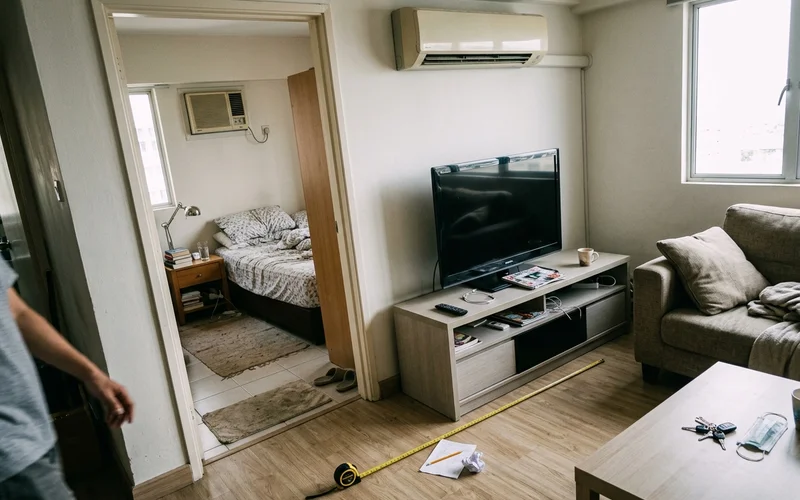
We use a simple formula to find the baseline square footage. To measure, multiply the length by the width in feet. A room 12 feet by 12 feet equals 144 sq ft.
If you only have metres, simply multiply the square metres by about 10.8 to get the right number. Finding the ideal aircon hp room size becomes much easier with the right starting point.
Our interactive room size tool does the maths for you and automatically adjusts for the environmental factors below. This aircon btu calculator malaysia standard makes the entire planning phase effortless.
Adjust for Heat: The Factors That Change the Answer
The baseline table is just a starting point, because external heat sources will force you to increase your cooling capacity. Environmental and lifestyle factors add significant thermal load to a room, and each one can easily push you up a size.
We categorize these heat sources into two main areas to make planning easier.
Structural Heat Sources
West-facing windows. Afternoon sun in Malaysia is intensely hot. Ambient temperatures in Selangor frequently peak above 34 degrees Celsius, meaning a room with large west-facing windows or glass sliding doors easily needs 10 to 20 percent more capacity.
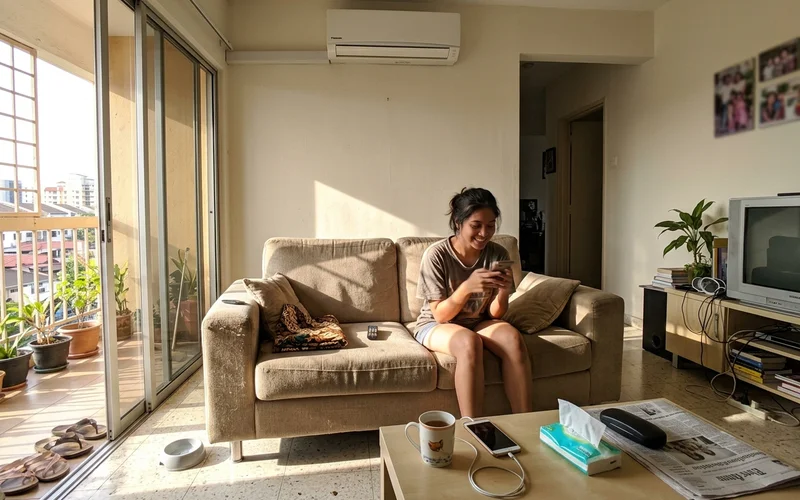
Top floor or under the roof. Rooms situated directly under a roof absorb heavy radiant heat all day. Our installers see this issue constantly in terrace houses and top-floor condos across the Klang Valley.
High ceilings. More vertical volume means more hot air to cool. Vaulted ceilings require more power to push the chilled air down to the living space.
Lifestyle and Usage Factors
Next to the kitchen. Cooking generates a massive amount of heat. We always recommend sizing up for spaces directly connected to an open-plan kitchen.
More people. Every person in a room radiates body heat. A busy living room where a family of five gathers needs a much higher capacity than a solo bedroom.
Electronics. Computers, servers, and large displays generate a surprising amount of warmth. A modern home office with a gaming PC and dual monitors can add over 1,000 BTUs of heat load to a small room.
Rule of thumb
If two or more of these apply, go up one size from the table. If none apply and the room is shaded, the table size is usually right.
What Happens If It’s Too Small
An undersized aircon runs flat out continuously and never quite reaches the temperature you have set. This forces the compressor to work harder, wear faster, and drastically inflate your electricity costs.
The room stays uncomfortably warm on hot afternoons because the cooling output simply cannot beat the heat entering the space. We regularly replace burned-out compressors that failed years early due to chronic undersizing.
A 1.0 HP unit struggling in a 300 sq ft room will consume maximum power all day long. This constant maximum draw can easily push your monthly usage past the 800 kWh limit, losing your TNB AFA exemption and causing a nasty bill shock.
What Happens If It’s Too Big
An oversized unit cools the air far too quickly, reaches the set temperature, and switches off abruptly in a pattern called short cycling. Bigger is definitely not better for effective climate control.
This rapid on-and-off cycle surprises people who assume a larger unit means better performance. Because the machine does not run long enough, it fails to pull enough moisture out of the air.
We know that in Malaysia’s 80 percent average humidity, a short-cycling unit creates several frustrating problems:
- Leaves the room feeling incredibly cold but sticky and clammy.
- Wears down internal compressor components much faster through constant restarts.
- Destroys the RM150 to RM300 annual efficiency gains you would normally see from an inverter unit.
Inverter models handle a slightly oversized room better because they slow down their compressor speed instead of switching off entirely. Even so, it remains far better to size the room correctly from day one. Our detailed guide on inverter vs non-inverter aircons explains exactly why these mechanisms matter.
Worked Examples
Applying these rules to real spaces shows exactly how factors like sunlight and room shape alter the final calculation. Here is a clear breakdown of typical room setups.
We compiled these common scenarios based on frequent service calls in the local area.
| Room Profile | Size & Conditions | Recommended Capacity |
|---|---|---|
| Standard Bedroom | 12 x 12 ft (144 sq ft). Fully shaded, occupied by one person. | 1.0 HP |
| Master Bedroom | 14 x 14 ft (196 sq ft). Features a large west-facing window. | 1.5 HP |
| Standard Living Room | 15 x 20 ft (300 sq ft). Open layout connected to the kitchen. | 2.0 HP (Or 2.5 HP if receiving afternoon sun) |
| Open-Plan Area | 25 x 20 ft living and dining space (500 sq ft). | Two wall units, or one ceiling cassette |
Reviewing these examples helps clarify how baseline numbers shift when environmental factors are introduced.
Sizing for Common Malaysian Homes
Every property is different, but specific architectural layouts dictate predictable cooling requirements. Understanding your property type helps narrow down the best hardware choice.
Certain patterns come up again and again in our daily installation jobs.
Double-Storey Terrace Houses
Upstairs bedrooms sit directly under the roof and trap heavy heat through the late afternoon. A 12 by 12 ft upstairs bedroom that would only need 1.0 HP on a ground floor often benefits immensely from a 1.5 HP upgrade. Ground floor living rooms are usually open to the dining area and kitchen. We always advise homeowners to measure the entire contiguous open space, rather than just the immediate sofa area.
Condominiums and Apartments
Modern Klang Valley condos often feature compact floor plans where living rooms range between 250 and 350 sq ft. Most condo bedrooms are well-shaded by the building structure.
We approach high-rise installations by checking three specific factors:
- 1.0 HP easily suits standard shaded rooms.
- 1.5 HP reliably handles the master bedroom.
- Living spaces featuring floor-to-ceiling glass facing west almost always require a size up.
The installation teams we deploy also recommend checking your exterior ledge space, since larger capacity outdoor compressors are physically bulkier.
Semi-Ds and Bungalows
Larger individual rooms and higher ceilings are the defining traits here. Living areas exceeding 400 sq ft struggle with uneven airflow from a single source. We find that these massive spaces are much better served by two separate wall units or one centralized ceiling cassette, rather than forcing a single 3.0 HP wall unit to do all the work.
Dedicated Home Offices
Prolonged remote work means computers, monitors, and networking gear run constantly and radiate heat. A small 10 by 10 ft study that would normally operate fine with 1.0 HP will definitely need 1.5 HP if it is packed with heavy electronics and occupied all day.
One Big Unit or Two Smaller Ones?
For large or L-shaped spaces, installing two smaller units often provides far better temperature control than one massive unit. Splitting the capacity allows for flexible usage and prevents uneven cold spots.
Air pushed from a single wall unit struggles to reach around sharp corners or travel to the far end of a long room. Two units spread the chilled air evenly across the space.
We see several distinct advantages to splitting your cooling capacity:
- You can switch one unit off when only half the room is occupied.
- Temperature distribution becomes much more balanced.
- You avoid the massive initial cost of a specialized ceiling cassette.
The obvious trade-off involves paying for two separate installations and maintaining two machines. We handle hundreds of these specific layout challenges every month.
For context, a standard back-to-back wall unit installation currently averages around RM300 to RM650 in labour costs. For open-plan spaces featuring a false plaster ceiling, a hidden ceiling cassette provides another sleek option, though labour costs jump to between RM700 and RM1,500. Our comprehensive guide to wall-mounted versus ceiling cassette aircons covers those specific hardware choices in detail.
We’ll Check Before We Install
Every room holds unique quirks, and a professional assessment ensures you invest in the exact right hardware. Before cutting any pipes or mounting brackets, our team confirms the required capacity directly with you.
A quick visual inspection tells us crucial things a basic table simply cannot, like the exact thickness of your glass or how the airflow will realistically reach a far corner. Send us your rough room measurements, the direction your windows face, and a quick photo on WhatsApp.
We will then recommend the exact HP requirements and outline your best hardware options. The standard installation package we offer starts at RM280 for a 1.0 HP unit with up to 10 feet of premium copper piping. We supply and service nine major brands, ranging from Daikin and Panasonic to Acson and Midea. Every single installation includes a comprehensive 30-day workmanship warranty to guarantee your peace of mind. If you are still wondering what hp aircon do i need, getting your home perfectly chilled is just a quick message away.