
We see a lot of advice about diy aircon cleaning malaysia circulating online across the Klang Valley. Much of that information can actually lead you straight into expensive repair traps. Finding the proper balance between basic upkeep and expert intervention is crucial.
Our daily service calls frequently involve rescuing units damaged by well-meaning weekend projects.
Dirty systems force the compressor to work harder, which can spike your monthly electricity bills by up to 25 percent. We want to show you exactly where the safety line sits. A few simple jobs are safe, but our experience shows that anything involving chemicals, electrical components, or the drain system belongs with a professional aircon service.
What You Can Safely Do Yourself
The best way to start a diy aircon cleaning malaysia routine is by focusing on the basics. Many simple maintenance steps require zero tools and take only minutes to complete. We recommend focusing purely on airflow and exterior surfaces. This approach keeps your warranty intact while preventing the most common performance issues.
Rinse the filters every 2 to 4 weeks
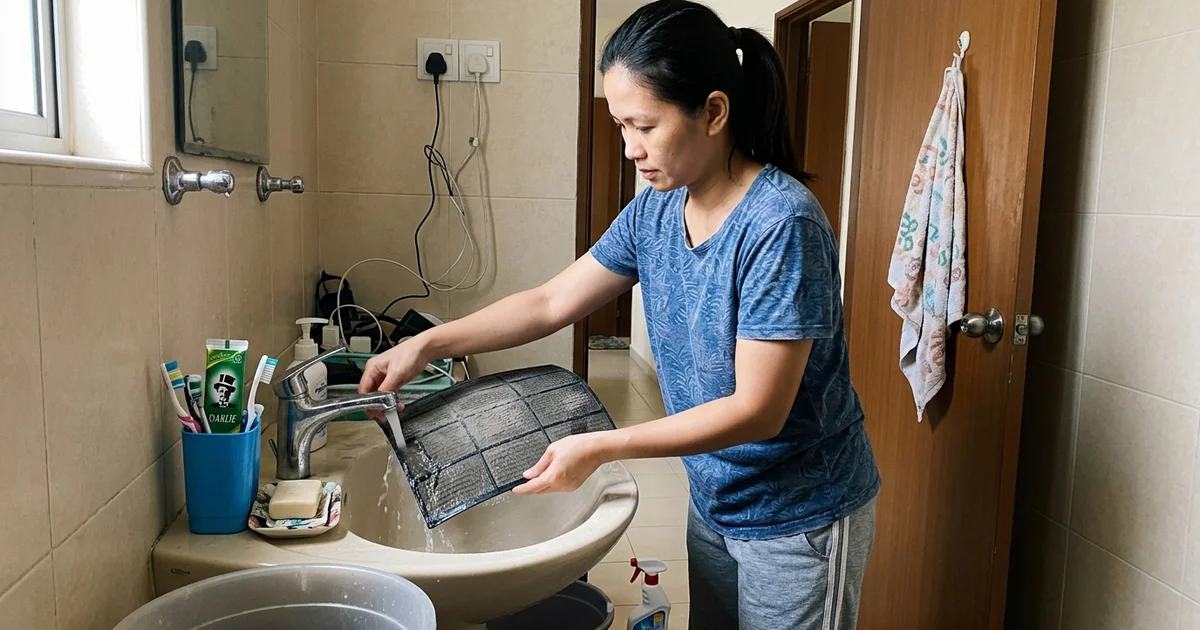
Our local climate features intense humidity that accelerates dust buildup and mould growth rapidly. This simple routine is the single most useful thing you can do for your system. Clogged filters restrict airflow, forcing the compressor into overdrive. We suggest doing this task every two weeks if you run the unit daily. The entire process takes just five minutes.
- Switch the aircon off with the remote, then at the main wall switch.
- Lift the front panel gently, as it usually hinges upwards on plastic tabs.
- Slide out the nylon mesh filters so you can clean aircon filter yourself properly.
- Rinse them under a tap using cool water. A soft brush helps with stubborn dust, but avoid stiff bristles that can tear the mesh.
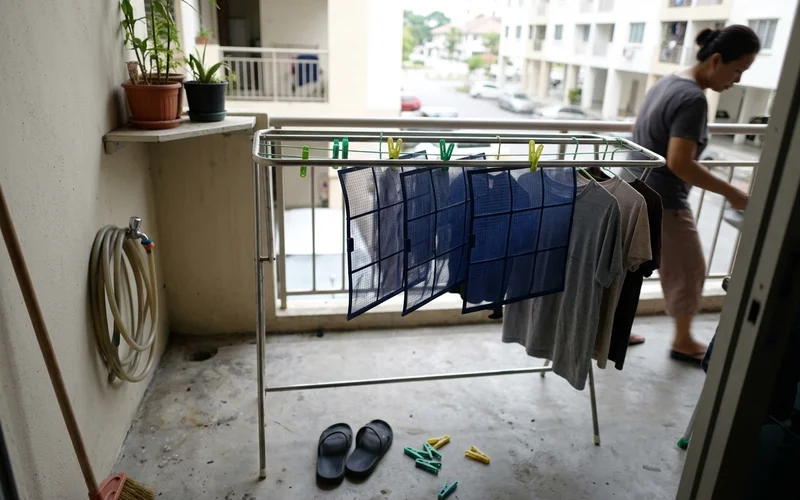
- Let them dry fully in the shade. Putting wet filters back inside invites instant mould growth.
- Slide them back into their tracks and snap the panel closed.
Wipe the cover and louvres
Our technicians often spot early signs of trouble right on the plastic exterior. A damp microfibre cloth on the outside casing and the directional louvres keeps dust from building up. You should never push cloths or fingers inside the blower area. We see many cracked louvres caused by people pressing too hard during a hasty wipe-down. Gentle pressure is all that is required here.
Keep the outdoor unit clear
The outdoor compressor needs breathing room to release heat efficiently. Make sure nothing blocks the airflow around this exterior unit. Common obstructions include stacked boxes, drying laundry, or overgrown potted plants pressed against the metal casing. We advise maintaining at least a one-metre clearance zone around the entire box. You absolutely do not need to attempt cleaning the outdoor unit yourself.
What You Shouldn’t Do Yourself
Our aircon repair teams constantly fix air conditioners that were perfectly fine until a DIY experiment went wrong. These complex jobs might look incredibly simple in online tutorial videos. The reality involves serious risks to your safety and your wallet. We categorise the following tasks as strict no-go zones for a standard diy aircon service attempt.
Spraying cleaners onto the coil. Household cleaners, bleach, and many supermarket spray cans are simply not designed for delicate aluminium fins. Some acidic formulas will actively corrode the metal within weeks. Others leave a sticky, soapy residue that actually catches more dirt over time. We frequently see a local phenomenon where DIY foam melts dust into a thick sludge. Without a professional high-pressure rinse, this chemical sludge sits in your unit and gets blown directly into your breathing space. Professional coil cleaners are scientifically chosen to be coil-safe and are always rinsed off completely. Our guide on whether chemical washes are safe explains exactly how we handle this delicate process.
Washing the inside with water. Spraying water anywhere near the internal PCB (Printed Circuit Board), sensors, and wiring can cause a massive short circuit. A replacement board easily costs between RM300 and RM600 in the current market. Washing without a proper catchment bag sends dirty runoff straight down your living room wall. We often find that this runoff is pitch black from built-up mould and bacteria.
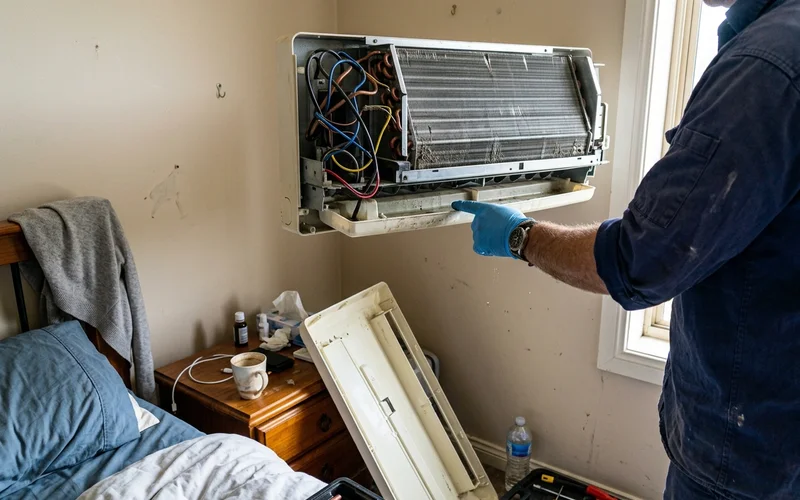
Taking apart the drain pan or blower. Manufacturers secure these plastic parts with hidden clips and very specific screw patterns. Forcing a stubborn piece will almost certainly crack the brittle plastic casing. A badly refitted or cracked drain pan is guaranteed to leak water onto your floor. Our technicians use specialised tools to remove these components safely during a deep clean.
Anything electrical. The large capacitors located in the outdoor unit can hold a lethal electrical charge long after the power is switched off. You should never open the metal access panels covering these components. Leave all electrical diagnostic work to someone formally trained and certified. We prioritise safety above all else when dealing with these high-voltage systems.
Topping up gas. Refrigerant handling requires accurate pressure gauges, the correct gas type (like R32 or R410A), and extensive training. Overfilling the system or using the wrong chemical blend causes severe damage to the compressor. Replacing a blown compressor is often more expensive than buying a brand new air conditioner. Our team checks gas levels precisely to ensure maximum cooling efficiency.
Rule of thumb
If a task requires a screwdriver, a harsh chemical, or a tall ladder to reach the outdoor unit, you need to book a technician.
Signs DIY Isn’t Enough
Even with spotless filters, your cooling system will eventually tell you when it requires professional intervention. The humid Malaysian weather practically guarantees that deeper cleaning will be necessary over time. Recognizing these warning signals early can save you from a complete system breakdown. We advise scheduling an inspection if you notice any of the following symptoms.
- A musty smell that comes back within minutes of switching on the unit.
- Water dripping from the indoor casing, usually caused by a gelatinous slime blocking the drain pipe.
- Weak airflow persisting even right after you have installed fresh filters.
- Black spots appearing on the swinging louvres or the internal blower wheel.
- The room cools slower than it did during previous months.
- New noises such as a constant rattling, an electrical buzzing, or a high-pitched squealing.
None of these listed items are simple filter problems you can solve alone. They originate deep within the cooling coil, the blower cylinder, the drainage network, or the electrical framework. Our diagnostic process targets these exact areas to restore factory-level performance.
What a Professional Visit Adds
We know it helps to see exactly what you are paying for when booking a service. Standard maintenance covers the functional basics, while a chemical wash provides a complete system reset. The table below breaks down the differences between a homeowner’s limits and our professional offerings.
| Task | DIY | Normal service (RM120) | Chemical wash (from RM160) |
|---|---|---|---|
| Filter rinse | Yes | Yes | Yes |
| Coil surface cleaning | No | Yes | Yes, deep |
| Blower wheel cleaning | No | Surface | Yes, deep |
| Drain pan and pipe flush | No | Yes | Yes, full flush |
| Outdoor unit and electrical check | No | Yes | Yes |
| Mould and bacteria removal | No | Partly | 99.9% |
Our comprehensive professional visit also acts as an early warning system for failing parts. A weak start capacitor, a microscopic gas leak, or a fan motor drawing too much electrical current are all relatively cheap to fix when found early. These identical problems become highly expensive emergencies when they cause a total failure in the middle of a hot week. We highly recommend sticking to a consistent professional schedule.
The Best of Both
We firmly suggest combining your basic upkeep with our technical expertise. You can easily manage the basic filter rinse yourself every few weeks to maintain daily efficiency. Then, you should book a normal professional service every three to four months for units used daily.
Adding a full chemical wash once or twice a year is the final piece of the puzzle. That specific combination keeps your aircon clean, highly efficient, and far less likely to suffer a sudden breakdown. Our booking process is fast and straightforward. When you feel ready to move beyond basic diy aircon cleaning malaysia, WhatsApp us your unit details and area for a transparent, fixed price.