
Is Aircon Chemical Wash Safe? The Short Answer: Yes, When It’s Done Properly
You know how quickly dust and mould build up inside a unit in our humid Klang Valley climate. It is a constant battle for homeowners trying to maintain good indoor air quality.
Many people ask us: is aircon chemical wash safe? A properly executed aircon chemical wash is completely safe for both your equipment and your household.
The safety of this procedure comes down to three specific factors: using a non-acidic solution, performing a thorough fresh-water rinse, and relying on trained hands.
The data shows exactly what impacts unit longevity, and there are a few practical ways to protect your investment.
Is It Safe for the Aircon?
Yes, a chemical wash is entirely safe for your air conditioner as long as the technician applies a non-corrosive, alkaline formula. The damage you read about online usually happens when untrained cleaners use the wrong type of solvent.
Your evaporator coil features thin aluminium fins wrapped around copper tubing. Aluminium reacts badly to strong acids and cheap household cleaners, which can pit and corrode the fins over time. Many popular units in Malaysia, such as those from Panasonic and Daikin, feature anti-corrosion coatings that strip away in minutes if exposed to harsh acidic sprays.
That rapid corrosion is the root cause of the chemical wash damage aircon owners sometimes report. We use a coil-safe alkaline cleaner specifically formulated for sensitive components.
This professional-grade foam operates at a safe pH level between 8 and 10 to break down stubborn biofilm without attacking the metal. Then, the technician rinses every trace of it off with clean water.
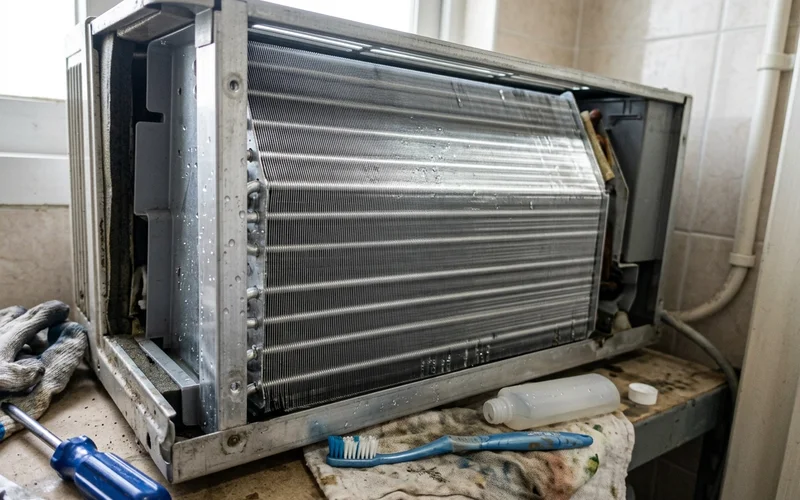
A few specific procedures protect the unit during the job:
- Power off at the breaker before any water goes near the unit
- Electrical parts protected so water never reaches the PCB, sensors or wiring
- Controlled pressure on the jet washer to prevent the soft aluminium fins from bending
- A fin comb application to straighten any fins that were already damaged
- A full test run to check airflow, cooling capacity and drainage before leaving
What causes problems
DIY sprays left on the coil without rinsing, household bleach or acid cleaners, and high-pressure washers held too close to the fins. These are the habits that give chemical washes a bad name.
Is It Safe for Your Family?
Yes, a professional chemical wash is safe for your family because no harmful residue remains in the system. Once the coil has been rinsed and the unit completes a test run, there is no cleaning agent left to blow into the room.
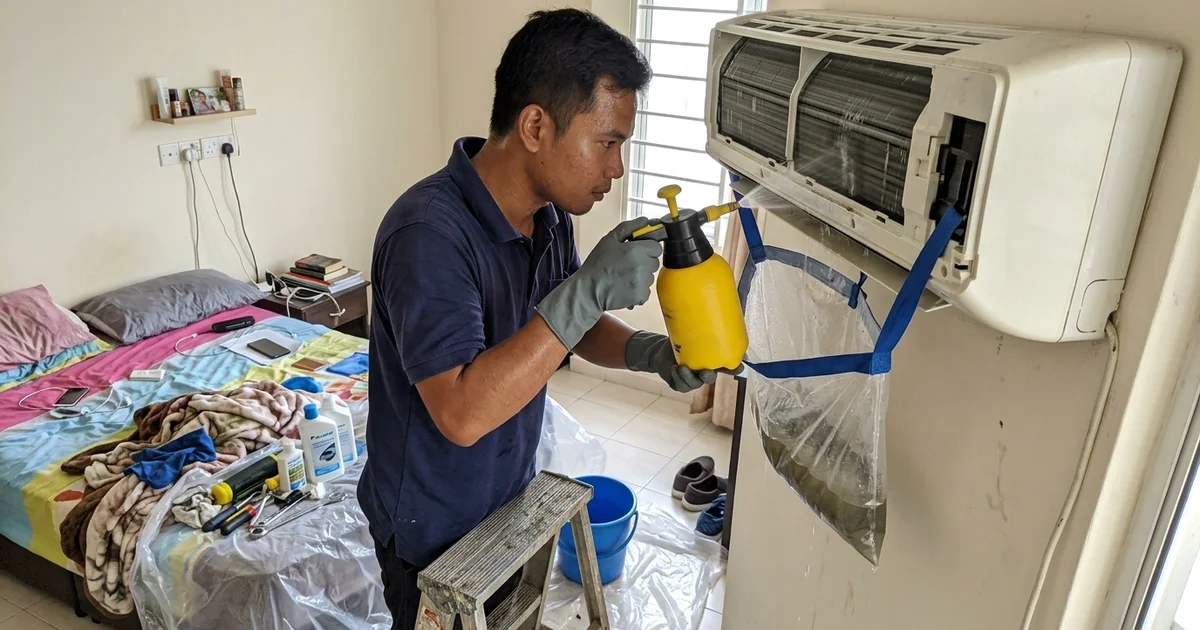
The rinse water carries the dissolved dirt and foam away into a specialised catchment bag. Our technicians then transfer this waste water into a sealed bucket and take it away for proper disposal. This closed-loop process ensures your bedroom floor and walls stay completely dry and clean.
We ensure our staff are fully certified in safe chemical handling protocols. They wear gloves, keep all containers securely closed and away from children, and never leave cleaning products behind on your property.
When can you use the room again?
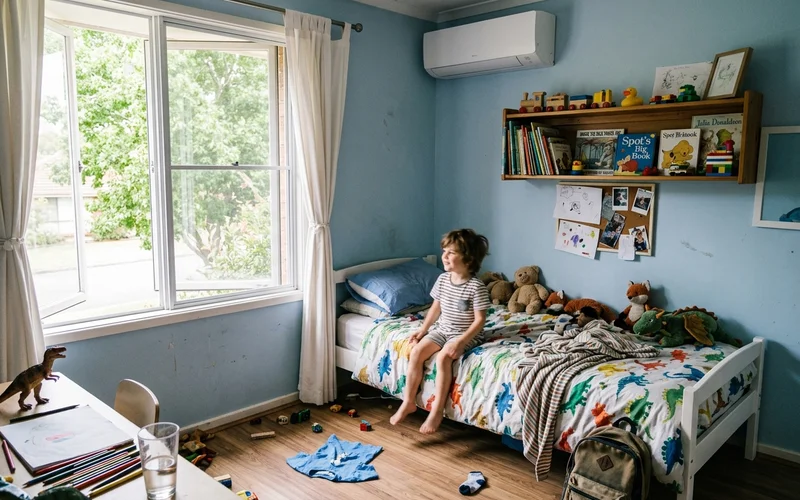
You can safely use the room immediately after the technician completes the final test run. We suggest opening a window for about fifteen minutes to clear any lingering damp smell.
That temporary scent is just the smell of wet plastic and metal surfaces drying out, rather than any lingering fumes, making the chemical wash safe for kids and sensitive family members. For babies’ and children’s rooms, many parents prefer to schedule the wash in the morning. This routine gives the room the entire afternoon to air out before bedtime, which is a great habit, though not strictly required.
Is it safer than not washing?
Skipping a deep clean is actually much riskier for your respiratory health than getting one done. A unit that lacks regular maintenance blows several harmful elements directly into your living space every time it runs:
- Mould spores that thrive in the dark, damp chassis
- Bacteria and biofilm building up on the blower wheel
- Fine particulate matter (PM2.5) that bypasses standard filters
A 2025 study published in the Environment-Behaviour Proceedings Journal focused on Malaysian office buildings linked dirty air conditioning systems directly to perceived indoor air quality symptoms like coughing and fatigue. The Klang Valley regularly experiences high PM2.5 pollution levels, making your indoor air filtration more critical than ever. For family members dealing with asthma or sensitive allergies, maintaining a sanitised evaporator coil is the healthier choice.
Our recommendation is to schedule a chemical wash every six to twelve months, depending on how often you run the AC. This frequency prevents biological growth from taking hold inside the machine.
What If Something Goes Wrong?
If a problem occurs, a reputable service provider will take full responsibility and fix the issue immediately. Every deep cleaning service should come with a clear, written guarantee to protect your equipment.
Our company backs every single job with a 30-day workmanship warranty. If the unit leaks or stops working properly because of the cleaning procedure within that month, a technician will return and fix it at no charge. We also conduct a 7-day follow-up check after every appointment to ensure the system is still cooling perfectly.
Acid damage from cheap cleaners usually takes two to three weeks to manifest as a slow refrigerant gas leak. A contractor offering only a one-week guarantee leaves you completely unprotected when those delayed symptoms finally appear.
How to Spot a Safe Provider
You can identify a reliable contractor by asking specific questions about their cleaning agents and procedures. Vague answers are an immediate red flag.
If you are comparing local options in the Klang Valley, you need to verify their standard operating procedures. A quick phone call is usually all it takes to separate the professionals from the risky operators.
| Questions to Ask the Provider | The Professional Answer | The Warning Sign |
|---|---|---|
| What cleaner do you use? | Alkaline, coil-safe foaming cleaner (pH 8-10) | Refuses to name the chemical type |
| How do you remove the chemical? | Thorough fresh-water pressure rinse | Claims that no rinse is needed |
| How do you protect my room? | Fitted catchment bag and floor covers | Asking to use your old newspapers |
| Is the work guaranteed? | Minimum 30-day written warranty | Offers only a verbal promise |
We highly recommend avoiding any provider who cannot give you a straight answer to these four basic questions. Your air conditioner is an expensive investment, and gambling on an unverified contractor rarely pays off.
Want to Know More About the Process?
Our guide on what an aircon chemical wash is and how it works covers everything you need to know before booking. If you are still wondering is aircon chemical wash safe, our technicians are happy to answer any specific questions about your unit.
Prices currently start at RM160 for a standard 1.0 to 1.5 HP residential split unit.
We cover all major suburbs across the Klang Valley, from Petaling Jaya to Cheras. Just send a WhatsApp message with your specific unit brand and location to the team, and a representative will confirm the exact price before anyone arrives at your door.