
Most standard air conditioning services simply cannot clear out the deep-seated grime that plagues units running daily in the Klang Valley heat.
We see countless Daikin and Panasonic units losing up to a third of their cooling efficiency due to this hidden buildup. This internal blockage forces your compressor into overdrive and spikes your monthly electricity bill.
Our team is going to break down the chemical wash vs overhaul aircon debate. You will learn exactly how to choose the right deep cleaning method to restore your cooling performance, whether you need a basic aircon chemical wash or a full aircon overhaul.
Two Deep Cleans, Two Different Jobs
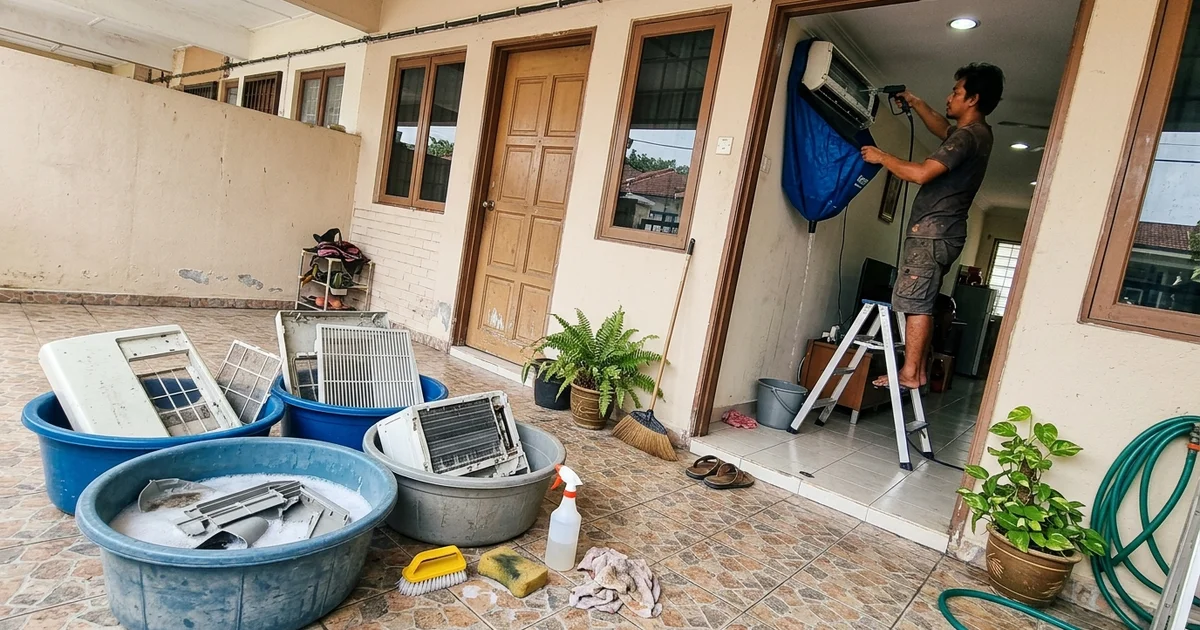
A chemical wash cleans the internal parts while they stay mounted on your wall, whereas an overhaul requires completely dismantling the unit to scrub every component separately. Both services go well beyond a basic filter rinse to tackle severe mould, hardened slime, and packed dust. We apply industrial-grade degreasers in both methods to dissolve organic buildup on the evaporator coils.
The defining difference lies in how far the technician dismantles the hardware to reach hidden contamination. You might occasionally search for the chemical overhaul meaning in the Malaysian market. Our technicians treat these terms as the exact same fully dismantled service.
Side by Side
Reviewing a direct comparison helps clarify the specific steps and costs associated with each cleaning method. The table below breaks down exactly what you get for your money.
We keep our pricing transparent so Klang Valley homeowners know what to expect before booking. Comparing these features side-by-side reveals why a fully dismantled cleaning takes twice as long.
| Feature | Chemical wash | Complete overhaul |
|---|---|---|
| Our Price (1.0 - 1.5 HP) | RM160 | RM180 to RM220 |
| Unit Dismantled? | No, washed on the wall | Yes, fully dismantled |
| Evaporator Coil | Foamed and jet-rinsed in place | Deep cleaned after parts are removed |
| Blower Wheel | Flushed in place | Removed, soaked, and hand-scrubbed |
| Drain Pan | Flushed with pressurized water | Removed to clear hardened algae |
| Fan Bearings | Left as is | Lubricated to stop squeaking noises |
| Refrigerant Gas (R32/R410A) | Top-up quoted after a pressure check | Includes up to 20 PSI free top-up |
| Expected Duration | 45 to 60 minutes | 90 to 120 minutes per unit |
Where the Real Difference Shows: The Blower Wheel
The primary difference between these services is how effectively they clean the blower wheel, which is the long cylindrical fan that pushes cold air into your room. This component constantly handles damp air, making it a prime breeding ground for mould and dust.
We find that regular chemical washes easily flush out light debris from well-maintained blades.
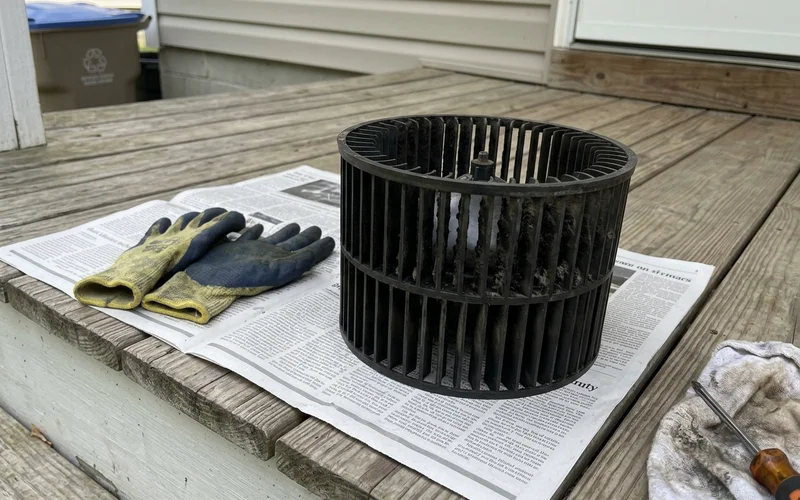
Neglected units develop thick, stubborn sludge that a standard jet washer simply cannot dislodge from the inner curves. Rinsing the outside of a heavily soiled wheel leaves fungal spores deep inside the plastic housing.
Our team knows this lingering mould causes that sour smell to return within weeks of a basic wash. The only guaranteed fix requires pulling the entire blower assembly out for a chemical soak.
The Impact on Airflow
This exact extraction process defines a proper overhaul. Every individual blade receives a manual scrubbing once the wheel is removed from the chassis.
We also detach the drain pan during this process to physically scrape away years of gelatinous algae. Clogged blower blades can reduce your air conditioner’s airflow efficiency by up to 30 percent.
The compressor has to run significantly longer to cool the room when the fan cannot push air effectively. We often see Tenaga Nasional Berhad bills drop noticeably once a fully blocked blower wheel is restored to factory condition. Clean blades also operate much more quietly, eliminating the rattling noises caused by uneven weight distribution.
The Free Gas Top-Up
A complete overhaul typically includes a complimentary refrigerant top-up of up to 20 PSI to ensure optimal cooling performance. Modern inverter units rely on precise levels of R32 or R410A gas to maintain their energy efficiency.
We strictly measure your system’s current pressure with a digital gauge before adding any new refrigerant. Low pressure readings almost always indicate a physical leak in your copper piping or flare nuts.
Our technicians will alert you to any detected leaks instead of blindly pumping in expensive gas. Topping up a leaking system is a temporary fix that wastes money and harms the environment. A proper leak repair saves you from repeatedly paying for top-ups.
Which One Does Your Unit Need?
Deciding on an aircon overhaul vs chemical wash depends entirely on your unit’s current cooling performance, smell, and maintenance history. You can easily determine the required depth of cleaning by inspecting the internal components yourself.
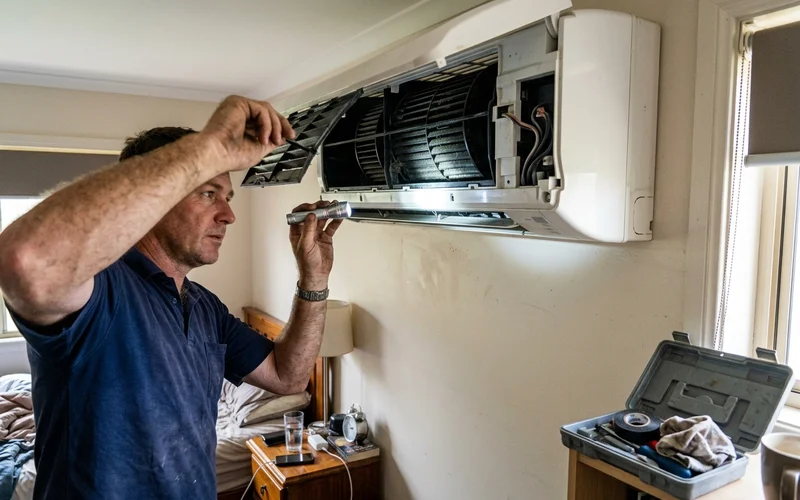
We recommend shining a flashlight through the output vents to check the condition of the hidden fan blades.
Choose a chemical wash if:
- The unit has been professionally serviced within the last 12 months.
- You notice a mild musty smell, but the hidden fan blades look relatively clean.
- Cooling takes a bit longer than usual, but the airflow still feels steady.
- The indoor unit occasionally drips water from a partially blocked drain pipe.
Choose an overhaul if:
- Your air conditioner has skipped professional maintenance for two years or more.
- Thick black or grey mould completely coats the curved blower blades.
- A sour smell returned less than a month after a standard chemical wash.
- The unit makes rhythmic vibrating noises due to heavy dirt unbalancing the fan.
- You recently moved into a Klang Valley rental property with visibly neglected cooling systems.
Try this before you book
Shine a phone torch through the louvres at the blower wheel. Light grey dust usually means a chemical wash. Thick black buildup that fills the gaps between blades usually means an overhaul. Send us a photo and we’ll tell you which.
What Each Service Looks Like on the Day
A chemical wash focuses on cleaning the unit while it remains attached to your wall, whereas an overhaul involves setting up a washing station on your balcony or bathroom floor. Both processes require specialized equipment to protect your furniture and flooring from dirty runoff.
The Chemical Wash Process
We start by laying down protective canvas sheets and attaching a waterproof catchment bag directly beneath the indoor unit. Removing the basic filters and plastic covers exposes the dirty evaporator coil.
Our crew applies a foaming, alkaline-based degreaser to safely break down the accumulated organic matter. The coil and fan are then jet-rinsed with high-pressure water until the runoff in the catchment bag turns completely clear.
We finish by flushing the main PVC drain pipe to prevent future water leaks. This entire wall-mounted procedure typically takes 45 to 60 minutes for a standard bedroom split unit.
The Complete Overhaul Process
The initial room protection steps remain exactly the same for an overhaul. We then proceed to strip the indoor unit down to its bare metal coil mounted on the wall.
The front panel, directional louvres, drain pan, and the entire blower wheel are physically removed from the room. Our specialists soak these heavily soiled plastic components in large tubs of cleaning solution.
These parts receive a thorough manual scrubbing to remove hardened mineral deposits and thick bacterial slime. We also inspect and lubricate the motor bearings before reassembling the clean components. The final step involves checking the outdoor compressor pressure and adding the complimentary refrigerant top-up. You should plan for this comprehensive teardown to take roughly 90 to 120 minutes per unit.
Mixing the Two Across a House
You do not need to order the exact same level of service for every air conditioner in your home. It makes financial sense to customize the cleaning approach based on how often each specific room is used.
We frequently perform a basic wash in a home office while doing a full teardown in the main living room. A master bedroom unit running every single night accumulates dust much faster than a spare room unit used once a month.
Our technicians will assess the condition of every single unit during the initial site visit. This targeted approach ensures you only pay for a heavy-duty teardown where it is genuinely needed. We also provide individual recommendations and apply a multi-unit discount to the final total.
Cost Over Time
When looking at the chemical wash vs overhaul aircon costs, investing in an overhaul for a severely clogged unit actually saves you money. The immediate price tag for a complete teardown ranges from RM180 to RM220, which is higher than our RM160 chemical wash.
We want homeowners to consider the hidden costs of running a suffocating air conditioner. A compressor struggling against blocked airflow draws significantly more electricity to cool the same square footage. Restoring full airflow can drop that excessive power consumption, lowering your monthly utility bills.
Our teams also find that deep cleaning prevents the expensive premature failure of overheated inverter boards. Paying for a basic wash that fails to remove the core blockage is simply throwing good money after bad. Well-maintained units rarely require this intensive teardown process. We recommend a standard chemical wash once a year to keep a healthy system running efficiently.
Still Unsure?
You can find a more detailed breakdown of warning signs in our guide on when an aircon overhaul is worth it. Visual evidence is often the fastest way to determine the correct level of intervention.
We encourage you to snap a quick photo through the front louvres and send it to our WhatsApp support number. Include a brief note about the last time the system received professional maintenance.
Our experienced technicians will review the image and recommend the most effective solution for your specific situation. You will always receive an honest recommendation, even if the cheaper option is all you need.